
When you hear the term “home care services,” you might picture simple companionship or help with chores. But for NDIS participants in Sydney and Wollondilly, it’s a far richer and more vital concept. It’s about receiving expert nursing and personal support right where you feel most comfortable and in control—your own home.
This isn't about fitting you into a pre-made clinical box. It's about building a personalised support system that enhances your independence and respects your dignity, allowing you to live life on your own terms.
What Are Home Care Services Under the NDIS?
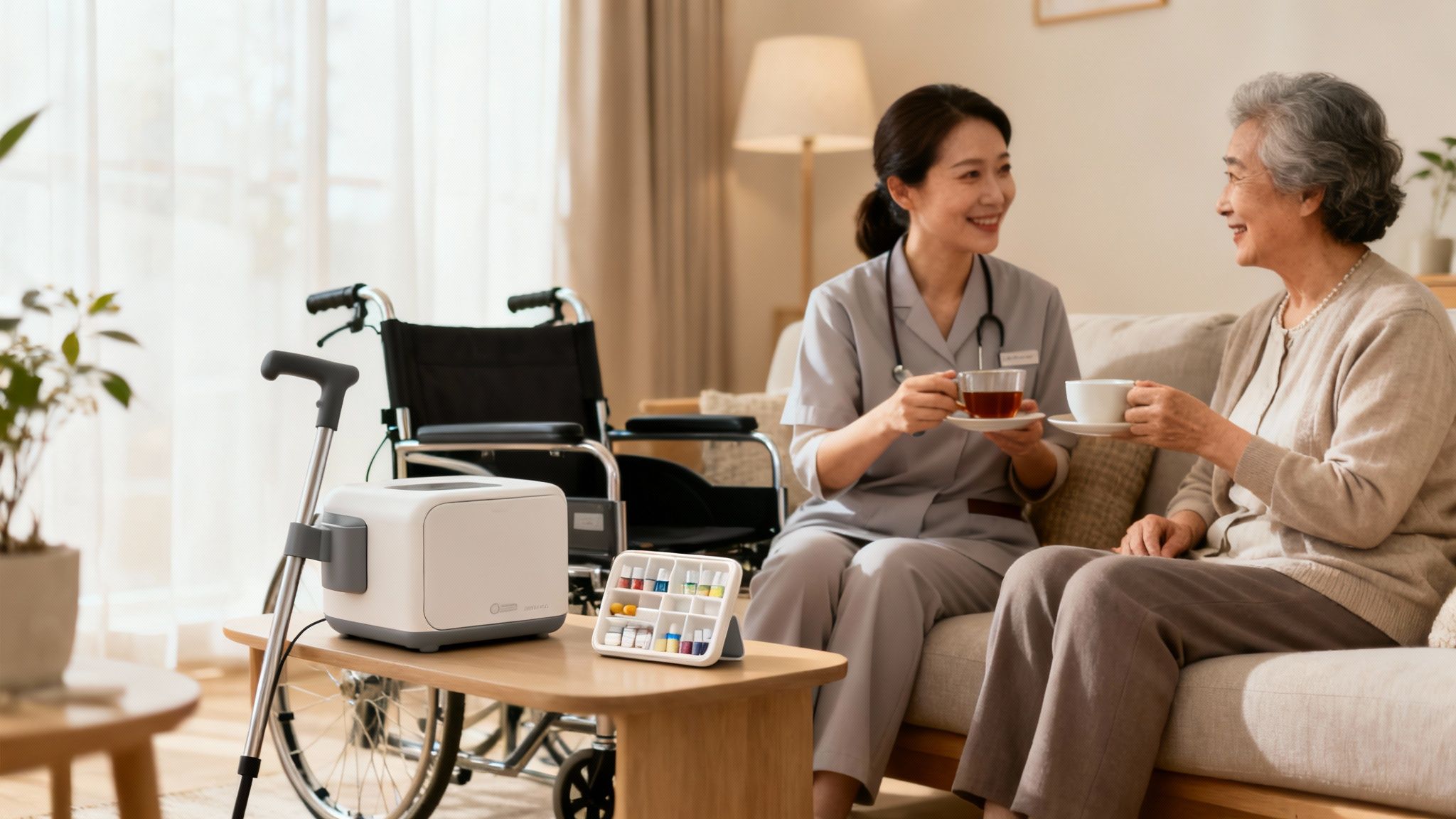
For NDIS participants, home care is the foundation for a fulfilling life. It transforms your home from just a place to live into a hub for your health, wellbeing, and connection to the world.
The whole approach is a fundamental shift away from a one-size-fits-all model. Instead of you having to adapt your life to a service, the service adapts to your life. This empowers you to keep your routines, stay close to your community, and live with the dignity you deserve.
This move toward in-home support is a massive national trend. The demand has soared, with over 280,000 people using Home Care Packages (HCP) as of March last year—that’s a 6% jump from the year before. In fact, over 1.2 million Australians now receive support at home, outnumbering those in permanent residential care by a staggering 5:1 ratio. The message is clear: people want to be cared for at home.
More Than Just Medical Support
At its heart, NDIS home care is about enabling you to be as independent as possible. It works on the simple but powerful belief that specialised medical care and daily personal assistance can be woven seamlessly into your everyday life.
The real magic of in-home care is how it supports your entire way of life, not just your health conditions. It’s about creating a safe environment, championing your independence, and respecting your choices in the one place you feel truly at ease.
This philosophy is absolutely critical for people with complex health needs. For them, home care isn't a luxury; it's the key that unlocks their ability to manage their condition effectively while staying connected to their family, friends, and community.
A Practical Example of In-Home Care
Let's make this real. Picture an NDIS participant in Campbelltown who has dysphagia (difficulty swallowing) and needs help managing their medication and meals every day.
- The Old Way: In the past, this might have meant constant trips to a clinic or even a permanent move into a care facility. This would completely disrupt their life and pull them away from their support network.
- The Home Care Way: Today, a trained support worker can visit daily to ensure mealtimes are safe and enjoyable. A registered nurse can pop in to manage medications. This simple, coordinated approach allows the person to stay in their own home, eat safely, and maintain their health without giving up their life.
This is exactly the kind of practical support that NDIS plans are designed to fund. By bringing services directly to your door, providers like Core Nursing Solutions help turn your house back into a thriving, supportive home. To understand more about how this works, you can read about our assistance with daily life under the NDIS.
What Kind of Clinical and Personal Support Can I Get?
When you’re looking into home care services, it’s helpful to see the support available in two main categories that work hand-in-hand. Thinking about it this way makes it much clearer what your NDIS plan can cover and how different services fit together to support you completely at home.
Let's break down these categories. One side is all about the practical, day-to-day help that keeps your life running smoothly. The other is the specialised clinical care from qualified nurses, for when health needs get a bit more complex.
Personal Care and Lifestyle Support
This is the bedrock of good home care. It’s all about helping you manage daily routines, stay independent, and keep connected with your life and community. Think of it as the foundational support that makes everything else possible. It’s flexible and built entirely around your goals—whether that’s staying healthy, enjoying your hobbies, or just living comfortably and safely in your own home.
This type of care can cover a lot of ground.
- Daily Personal Routines: This includes help with showering, getting dressed, and grooming. For example, a support worker can assist someone with limited mobility to safely use a shower chair, ensuring they start their day feeling fresh and dignified.
- Mealtime Management: For participants with conditions like dysphagia (difficulty swallowing), this support is absolutely vital. A practical example is a care worker preparing a texture-modified meal (like puréed vegetables and soft meats) and sitting with the person to ensure they eat safely.
- Continence Care: This means sensitive and professional help with continence aids. For instance, a support worker can assist a client in a way that prevents skin irritation and infections, making sure they feel comfortable and dignified.
- Getting Out and About: Support doesn’t stop at your front door. A care worker could accompany a participant to their weekly hydrotherapy appointment, assist with grocery shopping, or provide transport to a local community group meeting.
For example, someone living in Wollondilly with mobility challenges might get a hand in the morning to get ready for their day. Later, a support worker could help them prepare a safe, texture-modified lunch and then go with them to a local community group. It’s about joining the dots between health needs and life goals.
Complex Clinical Care
While personal care supports your daily life, complex clinical care is for specific medical needs that require the expertise of a registered nurse. Many people think this level of care can only happen in a hospital, but that’s just not the case anymore. With the right team, this high-level support can be delivered safely and expertly right in your own home—a place that’s almost always more comfortable and better for healing.
Let’s look at what some of these key clinical services involve.
To give you a clearer picture, here’s a quick overview of the main types of home care services we provide.
Overview of Home Care Service Types
| Service Category | Examples of Services | Ideal for Individuals Needing |
|---|---|---|
| Personal & Lifestyle | Showering, dressing, meal preparation, community access | Daily assistance to maintain independence and social connection. |
| Tracheostomy & Ventilation | Tube cleaning, suctioning, ventilator (CPAP/BiPAP) management | Support for complex respiratory conditions outside a hospital. |
| Enteral Feeding | PEG tube management, administering nutrition, site care | Specialised nutritional support for those unable to eat orally. |
| Wound Management | Care for pressure sores, surgical wounds, diabetic ulcers | Professional assessment and treatment to promote healing at home. |
This table shows how different services are designed to meet very different needs, from everyday help to highly specialised medical care.
Now, let's dive a little deeper into what that clinical care looks like in practice.
Tracheostomy Care
What it is: This is the expert management of a tracheostomy tube—an airway inserted into the windpipe to make breathing easier. It involves a strict routine of cleaning, suctioning, and being ready for any emergency to keep the airway clear and safe.
Why it matters at home: Being able to manage a tracheostomy at home is life-changing. A practical example is a child with a tracheostomy who can attend school with the support of a nurse, rather than being confined to a hospital. This allows them to live a fuller, more integrated life.
Ventilation Support
What it is: This involves looking after non-invasive ventilation (NIV) machines like CPAP and BiPAP, which help people breathe, especially while sleeping. Our nurses make sure the machine is working perfectly, the mask fits comfortably, and the settings are just right for you.
Why it matters at home: Having solid ventilation support at home is key to managing conditions like sleep apnoea or respiratory issues. For instance, a person with motor neurone disease can sleep safely through the night with a BiPAP machine managed by a nurse, improving their energy levels and overall wellbeing.
Receiving complex clinical care at home is not just about convenience; it’s about integrating essential health management into your life. It allows you to maintain your role in your family and community while receiving hospital-level support.
Enteral Feeding Management
What it is: You might know this as tube feeding. This service is for anyone who can't eat or drink enough to get the nutrition they need. A nurse will manage the feeding tube (like a PEG tube), give the feed, and make sure the site stays clean and free from infection.
Why it matters at home: This support ensures you get vital nutrition safely. For example, an elderly person recovering from a stroke can receive their nutrition via a PEG tube at home, allowing them to remain in a familiar environment with their spouse, which can greatly aid recovery.
Advanced Wound Management
What it is: This is much more than putting on a plaster. It’s the skilled care of complex wounds like pressure injuries, surgical wounds, or diabetic ulcers. A registered nurse assesses the wound, uses specialised dressings, and works to prevent infection and help your body heal.
Why it matters at home: Professional wound care at home saves you from frequent and often difficult trips to a clinic. For example, a person with diabetes who has a foot ulcer can have a nurse visit daily to change dressings and monitor for infection, preventing a serious complication that could otherwise lead to hospitalisation. Support from other specialists can be just as important, and you can learn more about how allied health services can support your care plan.
How to Use Your NDIS Funding for Home Care
Figuring out how to use your National Disability Insurance Scheme (NDIS) funding for home care services can sometimes feel like trying to solve a puzzle. But once you understand how the pieces fit together, you can unlock your plan’s full potential and get the right support at home.
Your NDIS plan is broken down into different support categories, each one designed to fund specific areas of your life. The real trick is matching the home care you need with the correct funding category in your plan.
Finding Home Care in Your NDIS Plan
Most of the in-home support you might need, from personal care to more complex clinical nursing, is typically funded under two main categories. Getting familiar with these helps you and your team make sure the funds go where they need to.
The two categories you’ll want to look for are:
- Core Supports: Think of this as your flexible, day-to-day budget. The ‘Assistance with Daily Life’ sub-category is where you'll find the funding for things like personal care, help around the house, and general support from a disability support worker.
- Capacity Building Supports: This budget is all about helping you build skills and become more independent. The ‘Improved Health and Wellbeing’ sub-category is often used for services from a registered nurse that help you manage specific health conditions right from your own home.
This structure ensures you can get funding for both everyday assistance and specialised clinical care when you need it.
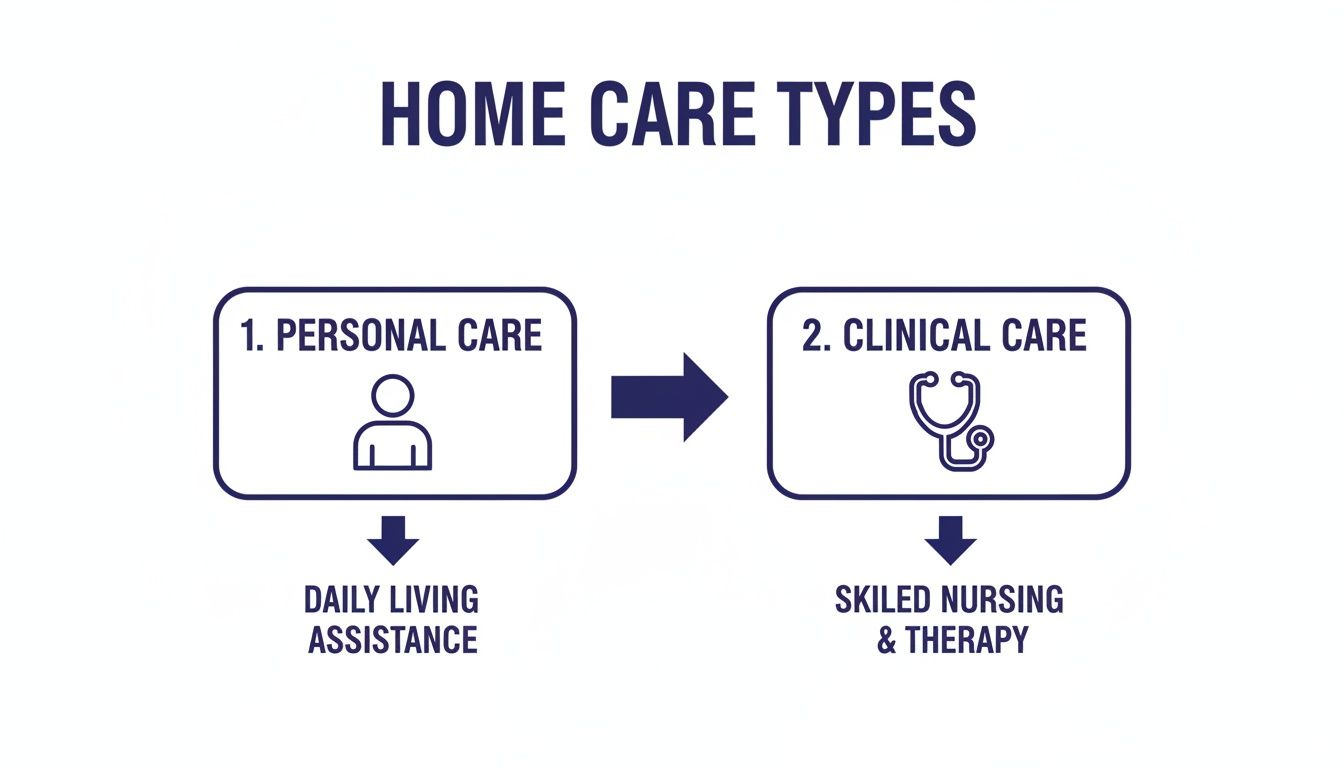
This distinction is important—it separates the support that helps you live independently day-to-day from the clinical support required for specific health needs.
A Practical Example of NDIS Funding
Let's look at how this works in the real world. Meet Sarah, an NDIS participant living in the Wollondilly area. Sarah needs daily help with managing her medication, and she also requires specialised wound care from a registered nurse for a pressure injury.
Her NDIS plan is set up to cover both needs perfectly.
1. Funding for Personal Care:
Sarah’s daily medication reminders are a routine task that helps her manage her day safely. This kind of support is funded through her Core Supports budget, specifically from the 'Assistance with Daily Life' portion. A trained support worker pops in each morning to help her with this.
2. Funding for Clinical Nursing:
The wound care, on the other hand, is a specialised task that demands the skills of a registered nurse. Because it’s a clinical service helping her manage a specific health issue, it’s funded from her Capacity Building budget, under 'Improved Health and Wellbeing'.
This clever allocation ensures Sarah’s daily needs are met while also providing the expert clinical care necessary for her recovery, all within her home. It’s a great example of how the NDIS can create a complete circle of support.
The Role of Your Support Team
The good news is, you don’t have to navigate all of this on your own. There are key people in the NDIS world whose job is to make this process much smoother.
- Support Coordinators: These professionals are your NDIS experts. A good Support Coordinator helps you understand your plan, connects you with providers like us at Core Nursing Solutions, and makes sure the services you choose are in line with your goals and budget.
- Plan Managers: If your NDIS funding is 'plan-managed', a Plan Manager handles all the financial admin. They pay invoices, track your spending, and deal with the paperwork, which frees you up to focus on what really matters—your health and wellbeing.
Working with these professionals ensures your funding is used correctly so you get the most out of it. To get a better handle on the financial side of things, you can explore more about the costs associated with home care services and how your plan can cover them. This kind of teamwork empowers you to make confident decisions about your care.
Choosing the Right Home Care Provider in Sydney

Finding the right provider for home care services in Sydney is probably one of the most important decisions you'll make for yourself or a loved one. It goes far beyond simply checking qualifications. You're looking for a team you can genuinely trust—people who respect your home, understand your personal goals, and have the deep expertise needed to deliver safe, high-quality care.
Not all providers operate at the same standard, and knowing what to look for empowers you to make a smart choice. Think of it like hiring a builder for a major home renovation; you’d want to see their credentials, look at their past projects, and feel confident they understand your vision. The same diligence applies here.
Your Practical Checklist for Vetting a Provider
To help you choose with confidence, here’s a practical list of questions you should ask any potential home care provider. How they answer will tell you a lot about their professionalism, the quality of their care, and their commitment to you.
- Are you a registered NDIS provider? This is the first and most critical question. NDIS registration is your assurance that they meet strict government quality and safety standards.
- What are the qualifications of your nurses and support staff? For example, if you need enteral feeding support, you should ask, "Do your nurses have specific training and recent experience in managing PEG tubes?"
- How do you keep your team’s skills up to date? A good answer would be something like, "Our nurses complete mandatory annual training in complex wound care and infection control to stay current with best practices."
- What’s your plan if there’s an emergency? Ask for a concrete example: "If my mother, who uses a ventilator, has a power outage, what is your immediate protocol?"
- How do you involve families in creating and reviewing care plans? A provider might respond, "We hold quarterly review meetings with you and your Support Coordinator to discuss progress and adjust the care plan as needed."
This whole process is about finding a true partner for your health journey. The right team will be open, collaborative, and completely focused on what works for you.
Understanding the Shifting Home Care Landscape
The Australian home care sector is in the middle of a major overhaul. With the new Support at Home program set to launch on 1 November 2025, the system is finally adapting to what people have wanted for years: to receive quality care in their own homes.
The need for these changes is urgent. As of March, 289,000 people had a Home Care Package, but the waitlist had swollen to 87,000. These reforms also aim to improve pricing transparency, with national median prices for services like personal care and nursing now published quarterly. This is invaluable information for families across the Sydney-Wollondilly region trying to make informed financial decisions. You can read more about why ageing Australians are waiting too long for home care packages at UTS News.
What Excellence in Home Care Actually Looks Like
When you use this checklist, it quickly becomes clear what sets a high-quality provider apart from the rest. At Core Nursing Solutions, our entire service is built on a foundation of unshakeable quality standards and genuine partnership. We believe excellence isn't just a buzzword; it’s a standard we have to meet every single day.
Choosing a provider is an act of trust. You are inviting them into your home and entrusting them with your wellbeing. The right organisation honours that trust with clinical excellence, compassionate support, and unwavering respect for your dignity and independence.
Here’s how we turn that philosophy into reality for our clients:
- A Multidisciplinary Team: Our team is a blend of highly qualified Registered Nurses, Enrolled Nurses, and expertly trained support workers. This structure means you always get the right level of care from the right professional, right when you need it.
- Collaboration with Your Health Team: We don't operate in a bubble. We actively connect with your GP, allied health professionals, and Support Coordinator to ensure your care is seamless and fully integrated. This teamwork is fundamental to achieving the best possible health outcomes.
- Person-Centred Care Planning: Your care plan is something we build with you, not for you. We take the time to really listen and understand your goals, your preferences, and your lifestyle. This ensures the support you receive is not only effective but also meaningful. You can see how we formalise this partnership by checking out our guide on creating an NDIS service agreement template.
By asking the right questions and knowing what to look for, you can find a provider that will be a true asset in helping you thrive at home.
What to Expect During a Home Care Visit

It’s completely normal to feel a bit apprehensive about letting a care professional into your home for the first time. It's a big step. Knowing exactly what happens during a typical home care visit can take the mystery out of it, replacing any uncertainty you might feel with a sense of confidence. The whole process, from day one, is built on collaboration and respect for you and your space.
It all kicks off with an initial chat where our main job is to listen—to understand your specific needs, your goals, and what a good day looks like for you. This is followed by a detailed assessment to build a complete picture of the support you need. Once that's done, we’ll introduce you to your dedicated care team, making sure that first visit feels familiar and comfortable.
The First Visit: Building a Foundation of Trust
That first appointment is all about making a genuine connection and double-checking that the care plan we've designed together is spot-on. A registered nurse will show up at the scheduled time, bringing not just their clinical skills, but a real focus on open communication. They'll go over your goals again, run through the tasks for the day, and always, always ask for your consent before starting any support.
For example, the nurse might say, "Today, the plan is to check your blood pressure and then change the dressing on your leg. Does that sound okay to you before we begin?" This simple step reinforces that you are in control.
A Look Inside: A Ventilator Support Visit
To bring this to life, let’s walk through what a visit looks like for someone who needs complex ventilator support at home. Picture John, an NDIS participant in Sydney who uses a ventilator at night. His Core Nursing Solutions nurse, Anna, arrives for her scheduled evening visit.
She starts by greeting John and his family warmly, asking how his day was and if he's noticed any changes in his breathing. This isn't just small talk; it's a vital part of her ongoing assessment. With practiced efficiency, Anna then moves through her routine checks:
- Equipment Check: She carefully inspects the ventilator, tubing, and mask, making sure every component is working perfectly and all settings are correct.
- Health Assessment: Anna completes a physical assessment, checking John’s vital signs like oxygen saturation, heart rate, and respiratory rate to get a clear clinical picture.
- Personal Care: She then helps John with his evening routine, making sure he’s comfortable and settled before connecting him to the ventilator for the night.
Throughout the visit, Anna explains what she’s doing and why. She also chats with John's wife, giving her an update on his condition and answering any questions she might have. This collaborative approach is essential for everyone to work towards the same health goals.
More Than Just a Checklist: Monitoring and Management
A home care visit is so much more than just ticking boxes. A huge part of the service is proactive risk monitoring and medication management, all guided by proven clinical practices but always tailored to your personal preferences.
A great home care visit is a seamless blend of clinical expertise and human connection. It's about ensuring safety, managing health needs, and doing so with a level of compassion that makes the person feel respected and cared for, not just treated.
During her visit with John, Anna is constantly observing. She’s paying close attention to his comfort levels and looking for any subtle signs of respiratory distress or medication side effects. If she gives him any medication, she cross-references it with his care plan and documents it precisely. This careful, methodical approach is what makes our home care services safe and high-quality.
This visit shows our core belief in action: clinical care must be excellent, but it must also be delivered with deep respect for the individual and their family. Whether we’re there to manage a ventilator or assist with other complex needs, our aim is always to fit our support smoothly into your life. To learn more about how we assist with long-term health needs, explore our approach to chronic condition management.
Your Next Steps to Securing Home Care
Figuring out how to get professional support at home can feel like a massive undertaking, but it’s often more straightforward than you might imagine. The most important thing to know is that expert, complex care is available right here for you, from Sydney all the way to Wollondilly.
We know that taking that first step is usually the hardest part. That’s why we’ve designed a simple, pressure-free way to get started. This is all about finding a partner you can truly trust—someone who will provide skilled, respectful care in the comfort of your own home. It all starts with a simple chat.
A Simple Three-Step Guide
Getting started with us isn't about paperwork and processes; it's a collaborative journey designed to give you complete confidence from day one. We’ll walk alongside you at every stage to make sure the care plan is a perfect fit.
Here’s how we can begin:
Initial No-Obligation Call: It all kicks off with a phone call. This is your chance to share your story, ask every question you have, and talk through what you need without any commitment. We're here to listen first and offer guidance second.
Free Consultation: If it feels like we’re a good match, the next step is a free consultation, either in person or online. One of our senior registered nurses will meet with you and your family to get a really deep understanding of your specific clinical needs and what you want to achieve.
Collaborative Care Planning: Finally, we create a detailed care plan together. This isn't a template; it's a document built entirely around you, making sure it lines up perfectly with your NDIS funding, your lifestyle, and the advice from your GP and allied health team.
Taking that first step is all it takes to regain your peace of mind. A personalised care plan means you or your loved one can continue living at home with dignity and independence, backed by a dedicated professional team.
Ready to see how we can help? Contact Core Nursing Solutions today to start the conversation.
Your NDIS Home Care Questions Answered
When you're first exploring NDIS home care, it's completely normal to have a lot of questions. We get it. To help you feel more confident and in control, we've put together answers to some of the queries we hear most often from families across Sydney and the Wollondilly region.
How Quickly Can We Get Services Started?
The timeline really depends on a couple of things: the provider's current availability and how complex your support needs are. Once you make that first call, a good provider will immediately focus on understanding your situation to build a care plan that’s both safe and effective.
For something like personal care, you might see services kick off within a week or two. But for more specialised clinical support, like ventilation or tracheostomy care, it naturally takes a bit longer. We need to make sure the right, highly-skilled staff are matched with you and that all the medical details are squared away with your GP. The most important thing is that your provider is upfront and clear about how long this will take.
Can We Have a Say in Who Our Support Workers or Nurses Are?
Absolutely. Feeling comfortable and trusting the people who come into your home is non-negotiable. While the provider handles the logistics of scheduling, your voice is a crucial part of the process. The aim is always to find a great personality fit and create a consistent team you can rely on.
You should always feel comfortable speaking up. If a support worker just isn't gelling with your family, a responsive provider will listen and work with you to find someone who is a better match. That relationship has to be built on trust.
For example, maybe you need a nurse who is incredibly patient and gentle when helping with your child's feeding tube. That's exactly the kind of feedback that should guide the matching process.
What Happens if Our Support Needs Change Over Time?
Life isn't static, and your care plan shouldn't be either. Think of it as a living document that grows and adapts right alongside you.
If your health situation changes—for better or for worse—your provider should be ready to reassess things with you. Let’s say a surgical wound is healing beautifully and ahead of schedule; your nurse, in discussion with your doctor, might suggest reducing the number of visits. On the flip side, if a new health concern pops up, the plan can be scaled up to include more support. This kind of flexibility is one of the biggest advantages of quality home care services.
Is Clinical Care at Home as Safe as Being in a Hospital?
Yes, it is—as long as it's delivered by a qualified and registered provider who follows the rules. Registered NDIS providers are bound by very strict safety and quality standards that cover everything from infection control and risk management to ongoing staff training.
Think about medication management. In a hospital, there are strict protocols for giving out medicine. Our registered nurses follow the exact same procedures in your home, carefully documenting every dose and keeping a close watch for any side effects. It’s all about bringing that hospital-grade safety and professionalism into a place where you're most comfortable.
Ready to take the next step with a partner you can trust? The team at Core Nursing Solutions Pty Ltd is here to listen, answer your questions, and help design a care plan that truly supports your goals. Learn more and get in touch with us today.