
Community health nursing flips the script on how we access professional care. Instead of navigating busy hospitals or crowded clinics, a skilled nurse arrives at your front door. This approach weaves medical support into your daily life, making it more personalised and accessible.
By focusing on individuals and families where they feel most at ease, community health nursing brings expert medical services into your neighbourhood. It’s about blending clinical know-how with the comfort of home. For example, a nurse could manage a complex wound dressing in your living room while you watch your favourite TV show, rather than you having to travel to a clinic.
Bringing Hospital-Level Care To Your Home
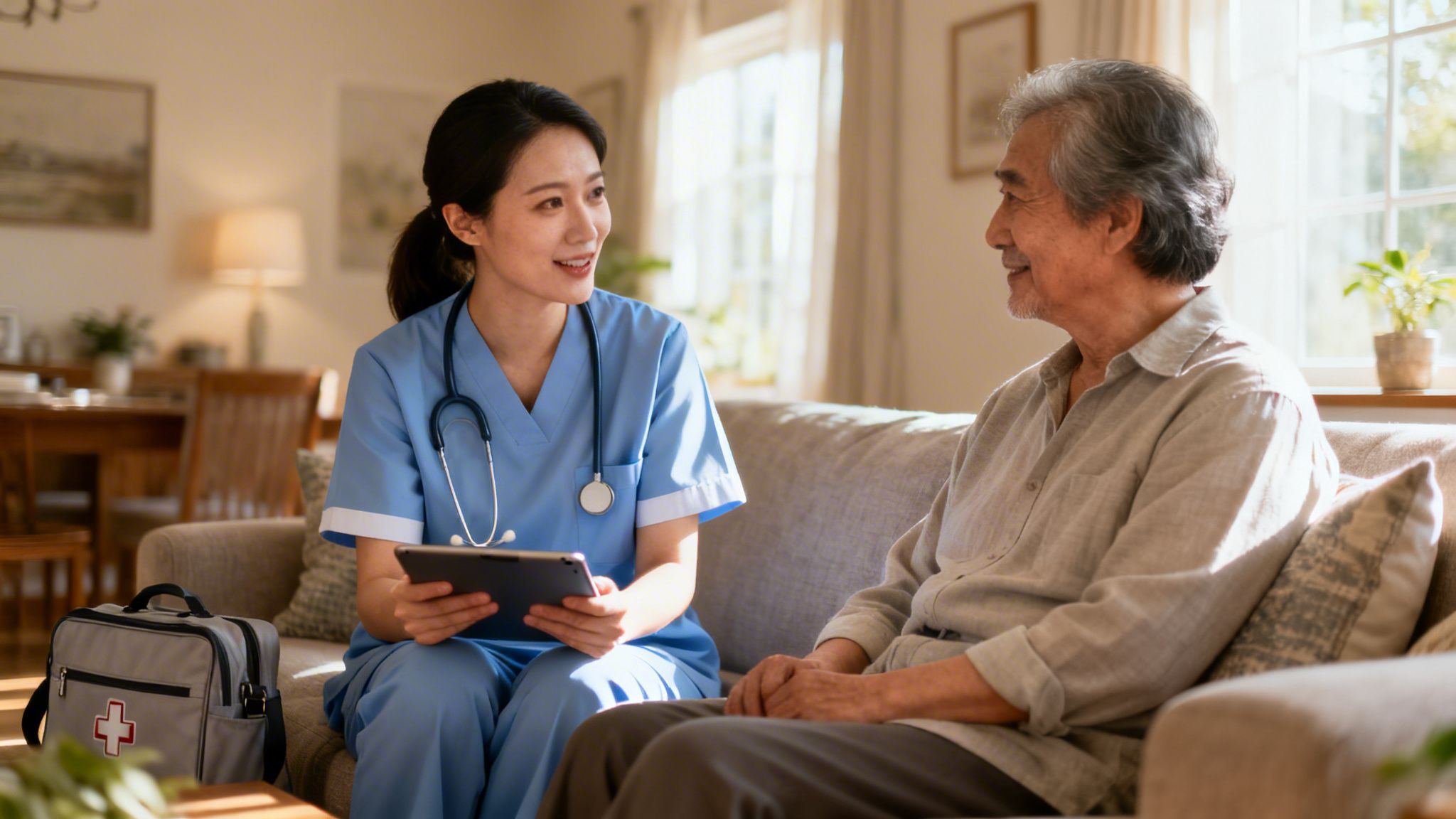
Picture this: rather than packing up for a trip to a hospital, a registered nurse shows up at your lounge room. They carry everything needed—from wound dressings to ventilation equipment—and deliver the same high standard of care you’d expect in a clinical setting.
This model shines for NDIS participants, especially those with limited mobility or ongoing complex needs. For instance, a person who requires daily subcutaneous injections can receive them from a visiting nurse, avoiding the stress and physical difficulty of daily travel. Instead of juggling transport and appointments, your care arrives exactly when and where you need it.
The Healthcare Quarterback In Your Corner
A community health nurse doesn’t just perform tasks; they orchestrate your entire treatment plan. They liaise with your GP, specialists and allied health professionals to ensure everyone shares the same playbook.
Key roles include:
- Co-ordinating appointments and follow-up visits. For example, scheduling a podiatry appointment and ensuring the GP receives the report afterwards.
- Interpreting and implementing medical orders, such as adjusting a medication dosage based on new blood test results from the lab.
- Monitoring progress and adjusting care routines. A practical example is tracking blood pressure readings at home and reporting trends to the cardiologist.
- Educating you and your carer on best practices, like demonstrating the correct technique for using an asthma inhaler.
By managing these connections, community health nursing prevents important details from falling through the cracks, leading to better health outcomes and a more cohesive support system for you and your family.
A Focus On Independence And Community Connection
The aim is simple: help you stay active and engaged in your own home. By delivering complex treatments in a familiar environment, we reduce stress and hospital re-admissions.
Benefits at a glance:
- Greater Comfort and Reduced Stress – Familiar surroundings ease anxiety.
- Enhanced Personalisation – Care plans adapt to your daily rhythm and household.
- Empowerment for Families – Nurses train and support loved ones to manage health tasks.
- Continuity of Care – A dedicated team learns your unique history and preferences.
Below is a quick look at how in-home nursing compares to traditional hospital care:
Comparing In-Home Nursing vs Hospital Care
| Aspect of Care | Community Health Nursing (In-Home) | Traditional Hospital Care |
|---|---|---|
| Setting | Home environment | Hospital wards |
| Comfort Level | High familiar surroundings reduce stress | Clinical setting can feel impersonal |
| Flexibility | Schedules adapt to your daily routine | Fixed appointment and ward rounds |
| Coordination | Personal nurse as a central point of contact | Multiple departments, potential for miscommunication |
| Family Involvement | Family members trained and supported | Visitation hours and rules can limit involvement |
| Continuity | Consistent nursing team familiar with your history | Shift rotations may lead to varied caregivers |
This comparison highlights why many people prefer receiving care at home: it’s more comfortable, flexible and centred on your needs.
If you live in the Sydney–Wollondilly region, Core Nursing Solutions Pty Ltd offers this in-home expertise. You’ll find local practitioners who understand the community and are committed to helping you live your fullest life.
To explore a range of topics on this subject, you can learn more about community nursing in our related articles.
The Vital Role of a Community Nurse
It’s easy to think of a community health nurse as someone who just administers medication or dresses a wound, but that barely scratches the surface. In reality, they're a unique blend of highly skilled clinician, strategic care coordinator, and empowering educator, all rolled into one. This multifaceted approach is what makes community nursing so effective, completely changing how people can manage complex health needs right at home.
Think of them as the central figure in your healthcare journey. They’re not just a service provider; they become a trusted partner who truly gets to know your personal health landscape—from your specific clinical needs to your daily routines and personal goals. This deep understanding is the key to delivering care that is not only medically sound but also fits seamlessly into your life.
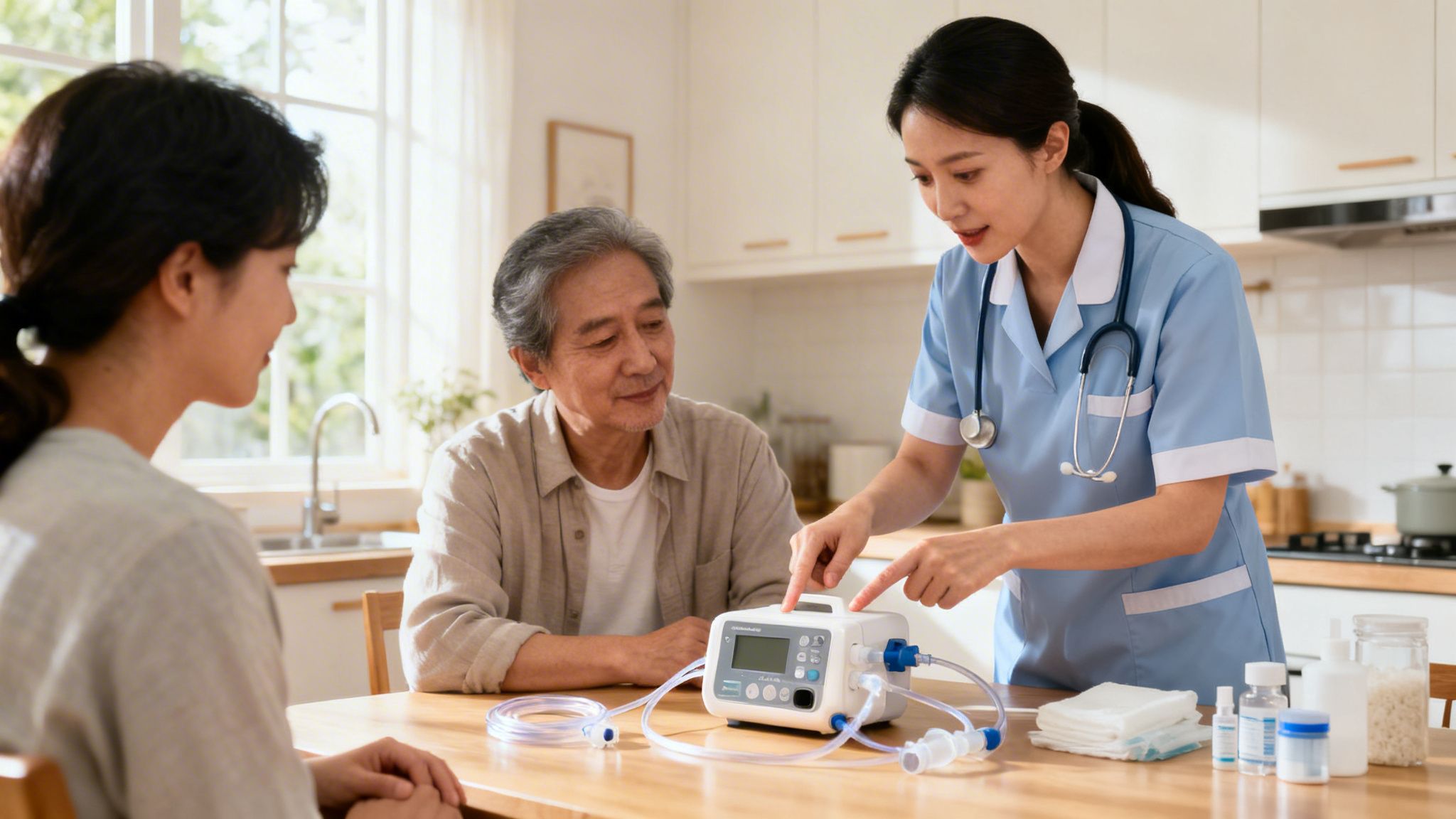
The Clinical Expert at Your Bedside
First and foremost, your community nurse is a clinical expert who brings hospital-level skills directly to your living room. They are trained to confidently and precisely manage a wide range of complex medical conditions, making sure you're safe and well in a comfortable, familiar setting.
This kind of hands-on clinical support is a game-changer for anyone who would otherwise be facing a long hospital stay. It beautifully bridges the gap between acute hospital care and independent living at home.
Here’s what that looks like in practice:
- Managing Nutrition: For someone who relies on a PEG feeding tube, the nurse ensures the site is clean and free from infection, administers feeds correctly, and can troubleshoot any issues with the equipment.
- Overseeing Complex Medications: They can manage specialised intravenous (IV) antibiotics for an infection like cellulitis, keeping a close eye out for side effects and ensuring the medication schedule is followed to the letter.
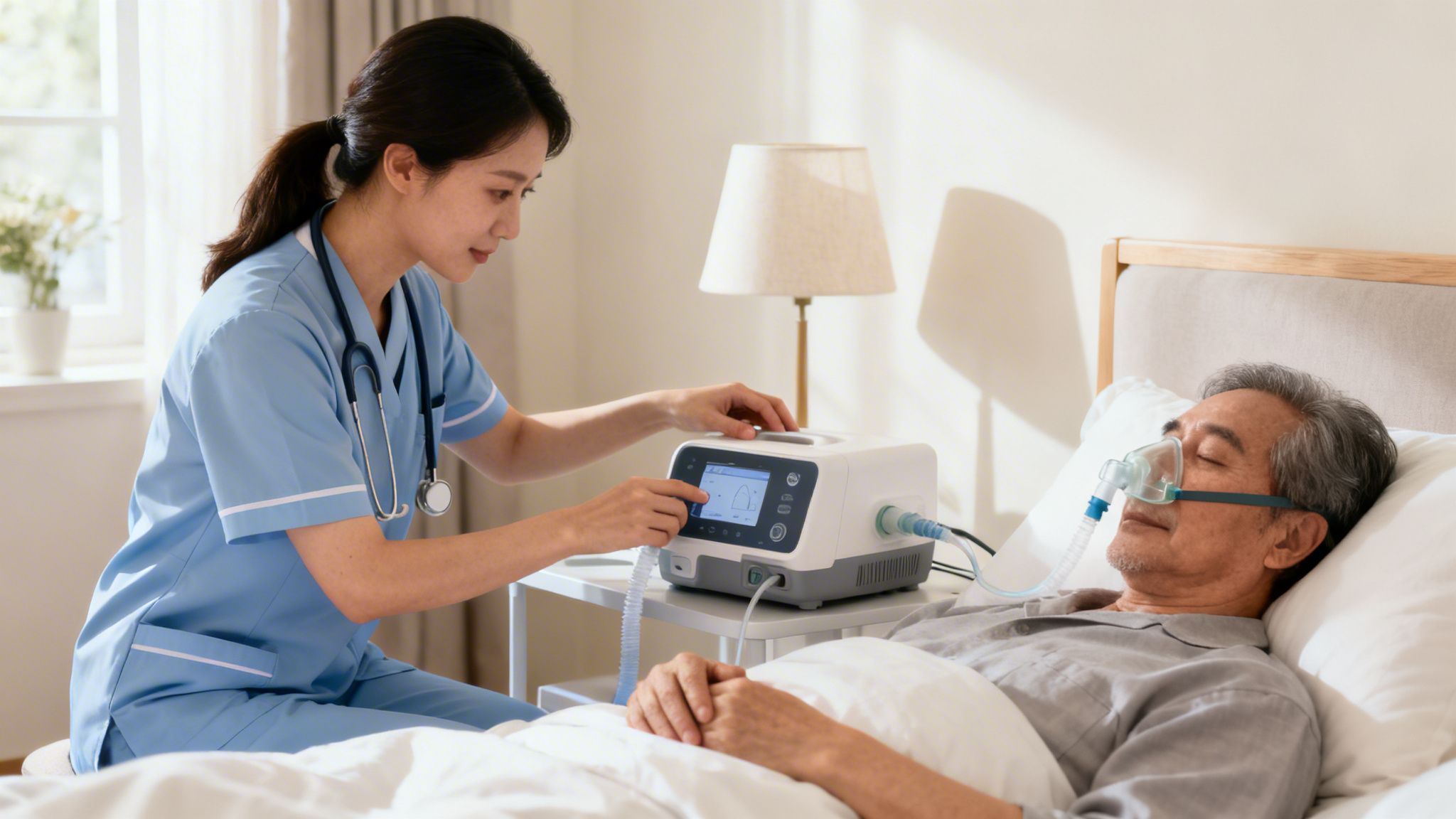
- Respiratory Support: A nurse might recalibrate a BiPAP machine at the bedside to ensure the pressure settings are just right for a good night's sleep, or provide expert tracheostomy care to keep an airway clear and safe.
The Central Coordinator of Your Care Team
Beyond the hands-on tasks, a community nurse from Core Nursing Solutions acts as the central hub for your entire care team. It's their job to prevent the kind of fragmented care that can happen when you're seeing multiple specialists, making sure everyone is on the same page and working towards the same goals.
This coordination is absolutely crucial for your healthcare to be seamless and effective. The nurse makes sure your GP's instructions align perfectly with your specialist's recommendations and your allied health therapist's goals. A practical example would be the nurse communicating with a physiotherapist about a patient's pain levels during wound care, so the physio can adjust their exercise plan accordingly.
A community nurse is the glue that holds your care plan together. They ensure seamless communication between your GP, specialists, and allied health team, preventing critical information from being lost in translation and advocating for your needs at every turn.
This proactive communication means a lot less stress for you and your family. You no longer have to juggle a dozen different appointments or repeat your health story to every new provider. For more insight into how registered nurses contribute in different settings, take a look at our guide on the role of an RN in aged care.
The Empowering Educator for You and Your Family
Perhaps one of the most powerful hats a community nurse wears is that of an educator. Their ultimate goal is to build up the skills and confidence within your own home, empowering you and your family to become active participants in your care. This transfer of knowledge is the foundation of long-term health management and true independence.
When you and your family feel confident, you become less dependent on others and gain a real sense of control over your own health.
This education can involve things like:
- Infection Prevention: Teaching a family member how to spot the early signs of a wound infection, like new redness or warmth, so they can get help quickly.
- Emergency Preparedness: Walking the family step-by-step through a seizure management plan—explaining exactly what to do, who to call, and how to keep the person safe.
- Medication Understanding: Going beyond how to take a medication to explain why it’s important, what side effects to watch for, and when it’s time to call the doctor.
This approach creates a strong support system around you, ensuring your care continues safely even when the nurse isn’t physically there. Professionals with these skills are in high demand across the country, especially in areas like Wollondilly. Australia's nursing workforce includes 523,676 registered nurses and midwives, with 409,794 currently employed. A significant number of these professionals work in community-based roles that are vital for providers like Core Nursing Solutions. To learn more about the workforce, you can explore the detailed nursing and midwifery workforce overview.
Clinical Nursing Services You Can Receive at Home
Community health nursing brings a whole suite of clinical support right to your front door. It essentially transforms your home into a safe, effective space for managing even the most complex health needs. This means you get skilled, professional care without the constant stress and hassle of hospital visits. It’s all about delivering high-quality, personalised medical services in the one place you feel most comfortable.
But this isn't just a matter of convenience. These services are specifically designed to keep you healthy, head off potential complications, and give you the confidence to live as independently as possible. From managing daily medications to handling sophisticated medical equipment, a community nurse provides the expert oversight that brings genuine peace of mind.
Let's break down some of the specific clinical support you can get at home.
Complex Continence and Bowel Care
Managing continence and bowel health with dignity is a core part of community nursing. This goes way beyond basic assistance; it involves detailed clinical assessments and creating personalised plans to boost comfort and prevent issues like skin breakdown or infections.
Nurses are highly skilled in a range of related tasks:
- Catheter Management: This covers the safe insertion, upkeep, and removal of all types of urinary catheters (indwelling, intermittent, or suprapubic). The focus is always on minimising the risk of urinary tract infections.
- Bowel Care Plans: For someone with a spinal cord injury or certain neurological conditions, a nurse can develop and put in place a regular, predictable bowel care routine that fits in with their lifestyle.
- Stoma Care: Nurses provide education and hands-on help for managing a colostomy or ileostomy, making sure the appliance is secure and the surrounding skin stays healthy.
Here’s a real-world example: Think of someone with a long-term suprapubic catheter. A community nurse doesn’t just pop in for scheduled catheter changes. They also teach the person and their family how to spot the early signs of a blockage or infection. This empowers them to get help quickly and avoid a trip to the emergency room.
This kind of proactive approach helps maintain your dignity and allows you to get on with your daily life with more freedom and confidence.
Respiratory and Ventilation Support
For anyone living with a respiratory condition, getting the right support at home can be absolutely life-changing. Community nurses are trained to manage a variety of respiratory therapies and equipment, helping you breathe easier in the comfort of your own bedroom.
This is a specialised area of community health nursing that requires careful monitoring and real technical skill. The main goal is to provide safe, consistent respiratory support that perfectly matches the recommendations from your specialist or respiratory physician.
Key respiratory services include:
- Tracheostomy Care: Expertly managing a tracheostomy site, which includes cleaning, dressing changes, and suctioning to keep the airway clear and prevent infections.
- Ventilation Management: Assisting with non-invasive ventilation (NIV) machines like CPAP and BiPAP. This involves checking for a proper mask fit, monitoring usage, and troubleshooting any machine alerts.
- Oxygen Therapy: Overseeing the safe use of home oxygen, including keeping an eye on your oxygen saturation levels and making sure all the equipment is working as it should.
For those who need more intensive, ongoing help, looking into private nursing care at home can provide a dedicated and consistent level of expert assistance tailored to specific respiratory needs.
Nutrition and Medication Management
Getting the right nutrition and medication at the right time is absolutely crucial for managing chronic conditions and feeling your best. A community nurse can step in to oversee these complex needs, providing the clinical supervision needed to ensure everything is done safely and correctly.
This support becomes especially vital when you're juggling multiple medications or alternative feeding methods. It reduces the risk of errors and helps you get the full benefit from your prescribed treatments.
Think about it this way: A person needs enteral feeding through a PEG tube. A community nurse's role is huge. They don't just manage the feeding schedule and flush the tube to prevent blockages; they also keep the insertion site clean to prevent infection. Just as importantly, they train family members how to operate the feeding pump and what to do if an alarm goes off. This builds a circle of confident care around the person.
This hands-on support and education create fantastic continuity of care and safety, making even complex nutritional and medication plans manageable at home. It’s just one more way community nursing brings clinical excellence right to your doorstep.
How In-Home Nursing Makes a Real Difference for NDIS Participants
Community health nursing is about more than just getting clinical tasks done at home. It’s a complete shift in how care is delivered, and it brings real, life-changing benefits for NDIS participants and their families. When you move care out of a hospital ward and into your own home, it fosters independence, leads to better health outcomes, and lifts a huge weight off the shoulders of carers. It’s a deeply personal approach that puts your goals and your wellbeing first.
The benefits go far beyond just saving a trip to the clinic. Receiving expert care at home means weaving health management into the fabric of your daily life, rather than putting your life on hold for healthcare. That fundamental difference is what empowers you to live more fully and connect with your community on your own terms.
More Independence, More Control
One of the most powerful things about in-home nursing is the independence it gives back to you. When your clinical needs are handled in your own space, you’re in the driver’s seat. You control your routine, your environment, and your life. That stability is absolutely vital for building confidence and chasing your personal goals.
Instead of your day being built around hospital rounds or clinic opening hours, care is planned around your schedule. It means you can keep up with work, study, or the social activities that make you, you.
Here’s a practical example: Imagine an NDIS participant needing complex wound care after surgery. With an in-home nurse, they get a daily visit to clean and dress the wound. This completely removes the stress and hassle of travelling to an outpatient clinic, freeing up their time and energy for things that matter to their mental wellbeing, like attending an art class or just catching up with friends.
It’s about managing your health needs without sidelining your life.
Achieving Better Health Outcomes
It just makes sense: consistent, one-on-one care from a dedicated nurse who knows your health history inside and out leads to better results. An in-home nurse can monitor your condition closely, spot subtle changes, and act fast to prevent a small issue from becoming a serious complication. This kind of proactive oversight is often far more effective than relying on occasional hospital check-ups.
This continuity helps build a strong, trusting relationship where your nurse becomes a true partner in your health journey.
- Fewer Hospital Stays: By catching things like infections or medication side effects early, in-home nursing helps you avoid trips back to the hospital that could have been prevented.
- Truly Personalised Care: Nurses adapt their support to your specific situation, tweaking your care plan as your needs evolve. This leads to much more effective treatment.
- Safer at Home: Having a clinical expert in your home minimises the risks that can come with complex equipment or tricky medication routines, ensuring everything is done correctly, every single time.
Primary health care nurses are the backbone of this model. Right now, Australia has over 98,000 of these incredible professionals. However, the Australian Primary Health Care Nurses Association has sounded the alarm, warning that nearly 40% could leave the profession in the next five years due to poor pay and recognition. This directly threatens the availability of the specialised services we provide at Core Nursing Solutions—like complex bowel care and medication support—which are so essential for people at home. You can dig into the findings in the full APNA workforce survey.
Reducing the Pressure on Carers
Community nursing also brings incredible relief to family members and carers. There’s huge peace of mind in knowing a qualified professional is handling the complex clinical tasks. It allows a carer to step back from being a medical support person and just be a partner, a parent, or a friend again. This support is crucial for preventing burnout and keeping family relationships strong.
Having this professional backup helps everyone involved feel more capable and less overwhelmed.
A real-world scenario: Think of a family caring for a loved one who needs ventilation support overnight. The pressure is immense. A community nurse from Core Nursing Solutions can take over the night shift, expertly monitoring the BiPAP machine, managing tracheostomy care, and handling any alarms. This lets the family get a proper night’s sleep, knowing their loved one is safe and in expert hands.
Ultimately, this model of care supports the entire family, creating a healthier and more sustainable environment for everyone.
Securing NDIS Funding for Nursing Support
Navigating the NDIS to get funding for in-home nursing care can feel like you're trying to solve a pretty complicated puzzle. But it doesn't have to be overwhelming. Once you understand how to connect your clinical needs with your life goals, you can advocate for yourself with real confidence.
The trick is to move beyond just listing medical tasks. It’s about telling a story—showing how professional nursing support is the key that unlocks your independence and allows you to be an active part of your community. When you frame the need for community health nursing this way, you're speaking the NDIS's language.
Aligning Your Needs with NDIS Support Categories
One of the first things you'll notice is that the NDIS doesn't have a specific bucket labelled 'nursing'. Don't let that throw you. Instead, funding for these essential supports usually comes from your Core or Capacity Building budgets, all depending on what you're trying to achieve.
Figuring out where your needs fit is the first step. Here are two of the most common categories:
- Improved Daily Living (Capacity Building): Think of this as the category for building skills and independence. Nursing support here might involve training you or your family to manage a health condition, like learning how to safely use a PEG feeding tube at home.
- Improved Health and Wellbeing (Capacity Building): This is all about managing the parts of your disability that affect your health. Funding in this area could cover a nurse creating a complex bowel care plan that gives you the freedom to get out into the community without stress.
In some situations, your Core Supports budget can also be used for specific nursing tasks, especially if they are part of your daily personal care.
Preparing for Your NDIS Plan Meeting
Getting organised before your plan meeting is your biggest advantage. Your mission is to gather clear, powerful evidence that shows why in-home nursing is a 'reasonable and necessary' part of you reaching your goals. You're essentially building a case for yourself.
The evidence you collect should paint a complete picture:
- Get a Detailed GP Report: Ask your doctor to write a letter that clearly explains your medical conditions. It needs to specify why certain tasks, like complex wound care or medication injections, absolutely must be done by a qualified nurse.
- Collect Allied Health Assessments: Reports from your OT, physio, or speech pathologist add critical weight to your request. For instance, a report from a speech pathologist on swallowing difficulties (dysphagia) is compelling evidence for why you need a nurse to manage your mealtimes safely.
- Document Your Daily Reality: Try keeping a diary for a week or two. Jot down the real-life challenges you and your family face managing your health. Most importantly, connect these challenges to how they stop you from doing the things you want to do.
The strongest applications connect clinical needs directly to NDIS goals. Instead of just saying, "I need a nurse for catheter changes," try framing it like this: "To achieve my goal of volunteering twice a week, I need a nurse to manage my catheter care. This will prevent infections that would otherwise force me to stay at home."
Questions to Ask Your Planner
Going into your meeting with the right questions shows that you're engaged and proactive in your own planning. It can make a huge difference.
Here are a few ideas to get you started:
- "My goal is to get back to part-time work. How can we word my plan to show that nursing support for my ventilation is essential for me to be well enough to work?"
- "How can we capture my need for specialised continence care in my plan so I can confidently join my local sports team?"
- "What specific type of report would be most helpful to justify funding for a nurse to oversee my complex medication schedule?"
This flow chart gives a great visual of how getting the right NDIS support can lead to real-life improvements.
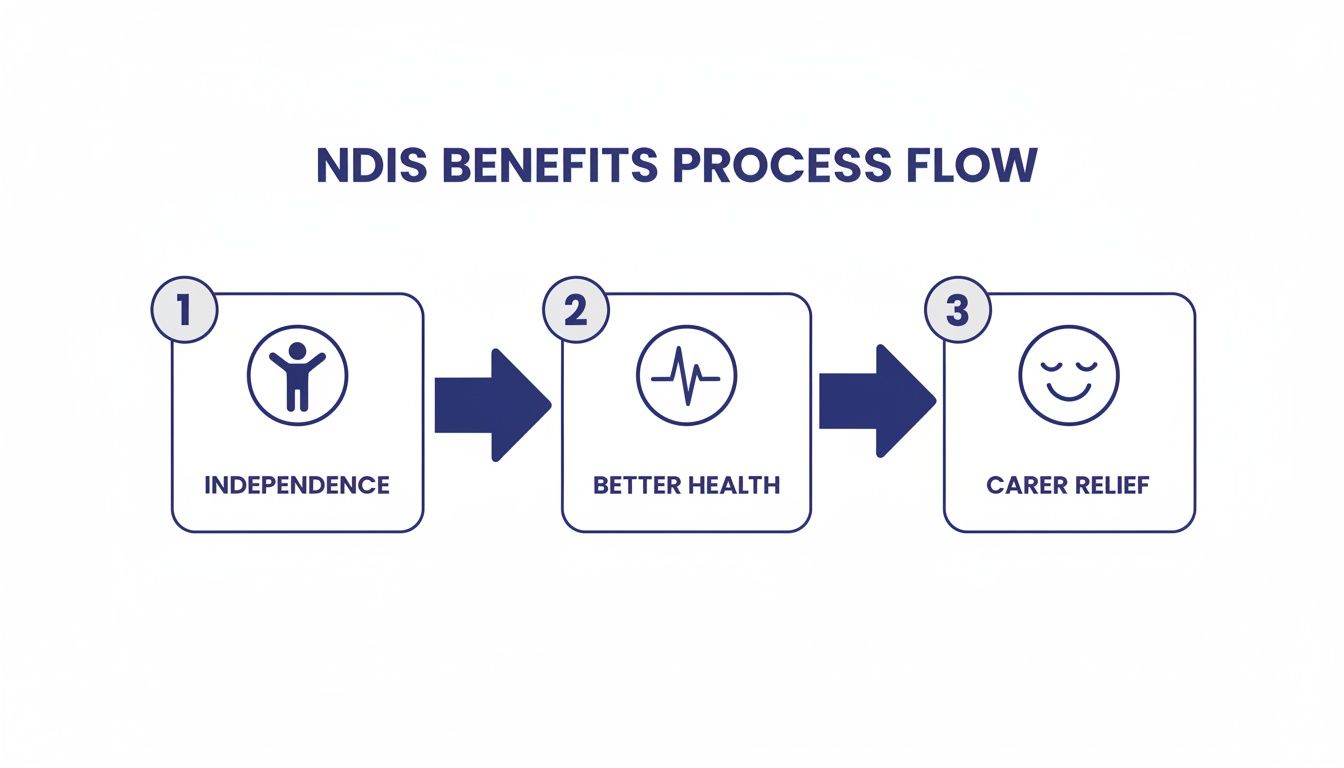
It’s a clear reminder that securing these supports is all about boosting your independence, improving your health, and giving your carers much-needed relief. To see more about how this works day-to-day, take a look at our detailed guide to NDIS in-home care.
Finding the Right Nursing Provider in Sydney
Choosing a community nursing provider is a big deal. You’re not just picking a service from a list; you’re inviting a professional into your home to be a core part of your health and wellbeing. For anyone living between Sydney and Wollondilly, finding a team that genuinely understands your clinical needs and personal goals is the key to making it all work.
Think of the right provider as a partner in your health journey. They should work with you, your family, your GP, and your allied health team—not just for you. This kind of partnership thrives on open communication, shared goals, and a genuine respect for your independence and choices.
Key Questions to Ask Potential Providers
To find that perfect fit, you need to dig a little deeper than just asking what services they offer. The right questions will tell you a lot about their philosophy of care and whether it truly aligns with what you’re looking for. A little preparation here goes a long way in helping you make a confident decision.
Here are a few questions I always recommend asking to get the conversation started:
- Care Planning: "How do you build a care plan that’s about my life goals, not just a list of my medical conditions?"
- Team Communication: "What’s your system for keeping my GP, OT, and other supports in the loop so we’re all working together?"
- Consistency of Care: "Will I see the same nurse regularly? If not, how do you manage handovers and introduce new staff?"
- Emergency Response: "What happens if a health issue pops up after hours? What’s your procedure?"
Asking these questions helps you see past the brochure and understand how an organisation operates on a day-to-day basis. It reveals their real commitment to person-centred community health nursing. You can learn more about what to expect from our approach to in-home nursing services.
Choosing a registered NDIS provider is non-negotiable for quality and safety. It confirms the provider has met strict government standards for safety, quality, and accountability, giving you complete peace of mind.
Why a Registered NDIS Provider Matters
When you work with a registered NDIS provider like Core Nursing Solutions, you’re getting a team that’s accountable. It means our nurses aren’t just clinically brilliant; they’re also thoroughly vetted and trained in NDIS processes and safeguards. This is more important than ever, especially with Australia facing a major nursing shortage. In fact, projections show we could be short around 85,000 nurses by 2025, which makes choosing a stable, accredited, and reliable provider absolutely crucial. You can read the detailed report from Health Workforce Australia about this growing demand.
When considering providers, understanding their outreach can be valuable; a robust digital marketing strategy for healthcare often plays a key role in how services, especially those offering home care and NDIS support, reach those in need. At Core Nursing Solutions, we are committed to being the trusted local expert in the Sydney to Wollondilly region, delivering evidence-based and culturally sensitive care.
Frequently Asked Questions
It’s completely normal to have questions when you're looking into in-home clinical care. Let's walk through some of the common things families ask us when they're starting this journey.
How Quickly Can Nursing Services Start?
We know that once you have funding in place, you often need support to begin as soon as possible. After your NDIS plan is approved or private funding is sorted, things can move quite fast.
The first step is always an initial assessment with one of our clinical nurse managers. We try to get this booked in within a few days. This meeting is all about us getting to know you and understanding exactly what you need so we can build a solid care plan together. Once that's done, we'll match you with the right nurse, and your regular in-home care can often get started within the week.
How Do You Match a Nurse to Our Specific Needs?
Finding the right nurse is about more than just a list of qualifications—it’s about finding the right person. We look at the whole picture to make sure it's a great fit.
- Clinical Skills: First and foremost, we match the nurse’s hands-on experience to your specific medical needs, whether that’s complex wound management, ventilation support, or anything in between.
- The Right Personality: We listen to what's important to you. Do you prefer someone quiet and calm, or warm and chatty? Finding a personality that clicks with your family makes all the difference.
- Local and Reliable: To make sure your support is consistent and dependable, we always prioritise matching you with nurses who live locally, right here in the Sydney to Wollondilly area.
What Happens in a Medical Emergency?
Your safety is always our number one concern. Every single care plan we create has a clear, detailed emergency protocol, which we develop with you, your family, and your GP.
This plan gives everyone step-by-step instructions on what to do, who to call, and when to dial for an ambulance. Our nurses are highly trained to handle emergencies calmly and professionally, providing immediate care until paramedics arrive.
It's really important to remember that our nurses provide scheduled care and aren't an on-call emergency service. In any life-threatening situation, the first and most critical step is to always call Triple Zero (000) immediately.
How Are Care Plans Adjusted Over Time?
People's needs change, and your care plan should change right along with them. It’s never a ‘set and forget’ document.
We schedule regular reviews—at least every six months, or sooner if there’s a major change in your health. For example, if you have a hospital stay, we will review your care plan upon your return home to incorporate any new treatments or medication changes. This is a team effort. We sit down with you, your family, your nurse, and anyone else from your medical team to make sure the support you’re receiving is still hitting the mark and helping you achieve your goals.
For answers to other common health-related queries, you might find this list of additional patient FAQs helpful.
Ready to explore how expert in-home nursing can support you or your loved one? The team at Core Nursing Solutions Pty Ltd is here to help you navigate your options and create a care plan that empowers you to live life to the fullest. Contact us today to start the conversation.