

When you hear the term "palliative care," what comes to mind? For many, it's a phrase heavy with the implication of end-of-life. But that's a common and significant misunderstanding.
At its heart, at-home palliative care is specialised medical support designed to improve your quality of life while you're living with a serious illness—all within the familiar comfort of your own home. It’s not about giving up. Think of it as adding an extra, deeply supportive layer to your existing care, helping you manage symptoms and reduce stress at any stage of an illness.
Understanding The True Goal Of At Home Palliative Care

Here in Sydney and the Wollondilly Shire, it's easy to see why people might confuse palliative care with hospice. But its real purpose is far broader and much more empowering. Imagine adding a dedicated support crew to your healthcare journey. This team doesn't replace your GP or specialists; they work right alongside them, focusing not just on the illness, but on the person going through it.
The main goal is simple but profound: to bring relief from the symptoms and emotional strain that come with a serious illness. It's appropriate at any age and any stage, and you can absolutely receive it at the same time as treatment intended to cure you.
A Focus On Comfort And Dignity
Living with a serious illness throws up daily challenges that you’ll never see on a medical chart. Palliative care at home steps into that gap, creating a supportive environment right where you feel safest and most in control. It's built on a foundation of dignity, comfort, and personal choice.
The approach is holistic, meaning it supports the whole person, not just the diagnosis.
- Physical Comfort: Proactively managing pain, breathlessness, nausea, and other distressing physical symptoms. For example, a nurse can work with your doctor to find a pain medication schedule that allows you to be alert during the day to spend time with family, rather than feeling drowsy.
- Emotional & Spiritual Support: Helping you and your family navigate the emotional weight of it all, offering counselling or spiritual guidance that respects your personal beliefs. This might involve arranging for a chaplain to visit or connecting you with a counsellor who specialises in supporting families through illness.
- Practical Assistance: Easing the load on your family by coordinating appointments, connecting you with resources, and making sense of the logistics. A practical example is having a team member arrange transport to a specialist appointment, so a family member doesn't have to take a full day off work.
This is a world away from just 'managing a disease'. It's about helping you manage your life with the disease. To get a clearer picture of what's involved, this guide on palliative care services at home explained offers some great insights.
Palliative Care At Home vs. Hospice Care
To clear up any confusion, it’s helpful to see how at-home palliative care differs from hospice care. While they share a focus on comfort, their timing and goals are distinct. Palliative care can begin at diagnosis, whereas hospice care is specifically for the final phase of life when curative treatments have stopped.
Here's a simple breakdown:
| Feature | At Home Palliative Care | Hospice Care |
|---|---|---|
| When It Starts | At any stage of a serious illness, right from diagnosis. | Typically in the last 6 months of life when curative treatment ends. |
| Treatment Goal | Can be provided alongside curative treatments like chemotherapy. | Focuses purely on comfort and quality of life; curative treatment stops. |
| Main Focus | To relieve symptoms, manage stress, and improve overall quality of life. | To ensure a peaceful, comfortable, and dignified end-of-life experience. |
| Provider | A team of nurses, doctors, and allied health professionals. | A specialised team focused on end-of-life needs. |
Understanding this distinction is key for families in the Sydney region to access the right support at the right time.
Why Staying At Home Matters
The desire to be in your own space, surrounded by familiar things and faces, is a powerful one. In fact, an overwhelming 70% of Australians say they want to spend their final days at home. Yet, the reality is that only about 15% are able to.
Why the huge gap? Often, it’s because families simply don't realise that high-quality, complex medical care can be delivered safely and effectively outside of a hospital. You can read more about these findings on the Australian Government Department of Health and Aged Care website.
At its core, at home palliative care is about honouring a person's wish to live as fully and comfortably as possible, on their own terms. It shifts the focus from 'what is the matter with you' to 'what matters to you'.
This person-centred philosophy ensures your values and preferences guide every single decision. For instance, if 'what matters to you' is being able to watch your grandchildren play in the backyard, the care team's goal becomes managing your symptoms so you have the energy and comfort to do just that. It’s a true partnership that supports not just you, but your entire family, making sure everyone feels heard and respected. If you're exploring the different kinds of support available, learning about the broader range of home health care services can also be incredibly helpful.
The Core Services That Make a Difference

True at home palliative care isn’t just an idea; it’s a set of practical, hands-on services brought to your doorstep by a skilled and compassionate team. These services are the building blocks for a better quality of life, giving people with serious illnesses the support they need to stay comfortable and safe at home.
This support is built around a multidisciplinary team, usually led by registered nurses who coordinate with experienced support workers. Together, they handle the complex medical and personal needs that come with a serious illness, turning what feels like an overwhelming situation into a manageable one.
Let's break down the essential services that really make this possible.
Symptom and Pain Management
One of the first things you'll notice with palliative care is expert symptom control. This goes way beyond just managing pain. We’re also talking about tackling other distressing symptoms like nausea, breathlessness, fatigue, and anxiety—the things that can really get in the way of daily life.
Think of someone going through chemotherapy who feels too sick to eat with their family. A palliative care nurse can step in, administering prescribed anti-nausea medication at just the right time, so that a simple, cherished family dinner can actually happen. It’s all about practical interventions that bring back those small, precious moments of normality.
"Effective symptom management is proactive, not reactive. The goal is to anticipate and prevent discomfort before it becomes overwhelming, ensuring the person can focus on living, not just on their illness."
This requires a deep understanding of how different symptoms play off each other. For example, a nurse might work with the GP to adjust pain medication so it’s less drowsy during the day, allowing for more meaningful time with loved ones.
Complex Nursing Care at Home
For many people, staying at home is only an option if they have access to high-level clinical skills. At-home palliative care brings that expertise right into the living room, helping manage conditions that would have otherwise meant a hospital stay. This is where the skill of a registered nurse becomes absolutely vital.
This specialised support covers a huge range of clinical needs:
- Wound Management: Expertly dressing and caring for complex wounds, like pressure sores or surgical sites, to help them heal and stop infections.
- Tracheostomy and Ventilation Support: Safely managing a tracheostomy tube or helping with CPAP/BiPAP machines to make breathing easier and more comfortable.
- Enteral (Tube) Feeding: Administering nutrition and medication through feeding tubes, taking great care to prevent any complications.
- Continence and Catheter Care: Providing dignified and skilled management of catheters and continence aids to maintain comfort and hygiene.
Real-World Example: Someone living with motor neurone disease might need a ventilator to breathe comfortably at night. A palliative care nurse not only manages the machine but also teaches the family some basic troubleshooting, which gives everyone much-needed peace of mind.
Medication Management and Organisation
Juggling multiple medications for a serious illness is confusing and can be risky. One small mistake—a missed dose or the wrong one—can lead to a major health setback. Palliative care nurses are your safety net here.
They take charge of medication management, which can mean anything from organising weekly pill planners to giving injections and watching for side effects. For example, a nurse can create a visual chart with pictures of the pills, dosages, and times, making it easy for an elderly person to follow. The nurse also makes sure the person and their family understand what each medication is for. This careful oversight is crucial for staying safe and getting the best possible results from treatment.
Personal Care with Dignity
Beyond the clinical side of things, sticking to personal routines is fundamental to our sense of self. Palliative care support workers are there to help with daily activities, but always in a way that respects privacy and encourages as much independence as possible. It’s about preserving dignity at every step.
Personal care services might include:
- Help with showering, dressing, and grooming.
- Assistance with moving safely, like from a bed to a chair.
- Support with preparing meals and eating.
A practical example of this is a support worker helping someone shower not by doing everything for them, but by setting up a shower chair, having towels ready, and being on standby to help only when needed. This practical help also lifts a huge physical weight from family carers, freeing them up to focus on what matters most: providing emotional support and simply being there. To get a full picture, it's worth understanding how nurses work with other specialists. You can learn more about how this coordination happens by exploring the allied health services that work alongside in-home nursing to make sure every aspect of a person's wellbeing is looked after.
How Your Care Team Works Together
Navigating the Australian healthcare system can feel like a full-time job, especially when you're already trying to manage a serious illness. Keeping track of different appointments, specialists, and medications is often overwhelming. This is exactly where an at-home palliative care team becomes your strongest ally.
Think of your palliative care nurse as the conductor of an orchestra. Your GP, hospital specialists, physiotherapist, and NDIS support coordinator are all brilliant musicians, but it’s the conductor who makes sure they play in perfect harmony. The team’s job is to coordinate all these moving parts, ensuring your care is seamless and focused entirely on your goals.
This coordinated approach takes a huge weight off your shoulders. Instead of you or your family having to update every single professional after a change, your care team ensures everyone is on the same page. For instance, after a hospital visit where a new medication is prescribed, the palliative nurse will immediately inform the GP, the pharmacist, and update the in-home care plan so everyone providing care is aware of the change. The result? Consistent, well-informed support when you need it most.
The Hub of Communication
Your palliative care team is the central hub for all communication. They’re the ones bridging the gaps between the hospital, your GP’s clinic, and what’s happening in your home, making sure critical information doesn’t get lost in translation.
This constant communication is absolutely vital for safe and effective care.
For example, if your nurse adjusts your pain medication schedule at home based on your symptoms, they don't just write it down in a notebook. They immediately get in touch with your GP and pharmacist. This ensures your official medical record is accurate and helps prevent dangerous medication errors. This kind of proactive communication is at the heart of safe at-home palliative care.
A coordinated care team prevents you from falling through the cracks. It means there is always someone overseeing the big picture, connecting the dots between different treatments and providers to ensure your care plan is cohesive and effective.
This way, any decision made by one specialist is understood and supported by the rest of your healthcare network.
Practical Examples of Care Coordination
It helps to see how this works in the real world. The coordination an in-home palliative team provides isn't just theory; it makes a tangible difference to your daily life.
Here are a few common scenarios:
- Seamless Hospital-to-Home Transitions: When you’re discharged from a Sydney hospital, your palliative nurse is already talking to the hospital's discharge planner. They make sure all the right equipment, medications, and support services are set up and waiting for you the moment you walk through the door, preventing stressful and risky delays.
- Collaborating with Allied Health: Let's say a physiotherapist recommends specific mobility aids. Your care coordinator gets to work sourcing them, perhaps through your NDIS plan. They also make sure the support workers are trained on how to use the equipment safely, integrating the therapist’s advice directly into your daily routine.
- Synchronising with Your NDIS Plan: For NDIS participants, the team works hand-in-glove with your plan manager or support coordinator. They provide the necessary clinical reports and evidence to justify funding requests for nursing care or specialised equipment, helping you get the most out of your plan. This is a crucial part of managing a chronic condition at home effectively.
Empowering You and Your Family
Ultimately, this joined-up approach puts you back in the driver's seat of your own health journey. With a dedicated team managing the logistics, you and your family can focus on what truly matters—your comfort, your quality of life, and your time together. To get the most out of this partnership, knowing the essential questions to ask your hospice nurse can help you advocate for what’s most important.
You are no longer just a patient trying to find your way through a fragmented system. You become the central focus of a unified team, all working towards a common goal. This brings incredible peace of mind, knowing you have an expert advocate ensuring your voice is heard and your wishes are respected at every turn.
How to Fund Palliative Care at Home in Sydney
Figuring out the financial side of at-home palliative care can feel like a huge hurdle, especially when you're already dealing with so much. For families across Sydney and the Wollondilly region, it’s often a source of stress, but it doesn't have to be. There are clear pathways to get the support you need, and understanding them is the first step to feeling back in control.
Essentially, you just need to know where to look. The main funding routes are the National Disability Insurance Scheme (NDIS), aged care packages, other government programs, and private options like health insurance or self-funding. Each one is designed for different situations, so let's break down which one might be right for your family.
Using NDIS for Palliative Support
If your loved one is under 65 and already an NDIS participant, their plan can be a crucial source of funding for palliative nursing. It's a common point of confusion, but while the NDIS isn't a health fund, it does cover supports related to a person's disability. When a progressive illness gets worse, many of the day-to-day needs that arise fit squarely within the NDIS framework.
Think of it this way: someone with motor neurone disease will find their needs increasing over time. Their NDIS plan can be used to fund in-home nursing to help with things like breathing difficulties or complex bowel care. These aren't just 'health' issues; they are supports that help them manage the impacts of their disability at home.
So, how do you make it happen? A key step is often requesting a plan reassessment. As your loved one's condition changes, you can ask for a review to add funding for clinical nursing support. This is usually backed up by reports from their GP or specialists, which show how this extra support helps them achieve their NDIS goals—like being able to live as independently as possible at home.
The NDIS is all about funding supports that are 'reasonable and necessary' to help a person live an ordinary life. When someone's condition becomes palliative, nursing support for symptom management or personal care directly aligns with this goal.
This is such an important pathway, particularly as the need for palliative care continues to grow. We're seeing a major demographic shift in Australia; in 2023, 68% of all deaths were people aged 75 and over. But for those under 65, the NDIS is often the only option, highlighting just how critical it is to get this right. The challenges at the intersection of NDIS and palliative care are well-known, as you can read in these insights on palliative care in the Australian context.
Aged Care and Government Programs
For Australians over 65, the funding journey usually starts with aged care programs. A Home Care Package (HCP) is a common source of funds for services that help someone stay in their own home, covering personal care, nursing, and allied health. The catch is that an HCP might not be enough for high-intensity clinical care, which is where other programs can sometimes step in.
For example, a Level 4 HCP might cover daily personal care visits and a weekly nursing check-in, but if someone needs overnight nursing support for complex pain management, the package funds may not stretch that far.
To help bridge these gaps, the Australian Government introduced the 'Greater Choice for At Home Palliative Care' measure. This isn't a direct funding stream you can apply for, but it strengthens the local health networks and organisations that provide palliative services. Ultimately, it means better coordination and more availability of quality care outside of a hospital setting. For those needing entry-level support, it's also worth reading our guide on the Commonwealth Home Support Program.
Private Funding and Other Options
Sometimes, government-funded packages aren't available quickly enough or don't cover the full extent of a person's needs. In these cases, private funding becomes the go-to option. Many families choose to self-fund services to get immediate support started or to top up an existing package with extra hours or more specialised care.
For instance, a family might use a Home Care Package for daytime support but choose to privately fund a nurse for a few nights a week to ensure a family caregiver can get some much-needed rest.
It's also a good idea to check with your private health insurer. Some policies include benefits for palliative care at home, so a quick phone call to your provider can clarify exactly what your level of cover includes. It's always worth asking the question.
Funding Pathways for In-Home Palliative Care
Navigating the various funding options can be confusing. To simplify things, this table summarises the main pathways, who they're for, and the kind of services they can cover.
| Funding Source | Primary Audience | Covered Services Example |
|---|---|---|
| NDIS | NDIS participants under 65 with a permanent and significant disability. | In-home clinical nursing for complex symptom management related to a disability. |
| Home Care Package (HCP) | Australians aged 65+ (or 50+ for ATSI) who need coordinated care to live at home. | Personal care, nursing, allied health, medication management, social support. |
| CHSP | Australians aged 65+ (or 50+ for ATSI) needing entry-level support for a few specific tasks. | Basic personal care, domestic assistance, transport. |
| Private Health Insurance | Individuals with an appropriate level of hospital or extras cover. | May contribute to nursing costs or hospital-in-the-home programs. |
| Self-Funding | Anyone who needs immediate care or wants to supplement another funding source. | Any required service, from personal care to 24/7 complex clinical nursing. |
Ultimately, the best path forward depends on your loved one’s age, eligibility, and the intensity of care they require. The key is to explore all avenues to build a sustainable and comprehensive care plan.
A Step-By-Step Guide to Arranging Care
When you’re facing a serious illness, figuring out how to arrange at-home palliative care can feel completely overwhelming. But it doesn’t have to be. We find it’s best to break it down into a few clear, manageable steps. This simple roadmap helps families across Sydney and Wollondilly navigate the process, making sure your loved one’s wishes are always front and centre.
The whole journey starts with a simple conversation, focusing on what truly matters to the person needing care. Each step then builds on the last, creating a solid foundation of support that feels reassuring, not complicated.
Step 1: Initial Consultation
The first move is to have an initial chat, usually with an experienced clinical nurse. Think of this less as a formal medical meeting and more as a heartfelt conversation. The main goal here is to really get to the bottom of what ‘quality of life’ means for your loved one and your family.
This is your chance to talk openly about hopes, fears, and personal goals. A goal could be as simple as being well enough to sit in the garden for an hour each day, or as specific as managing pain to continue with a beloved hobby. This conversation really sets the tone for everything that follows.
Step 2: Clinical Assessment
After that first chat, a registered nurse will visit the home to carry out a thorough clinical assessment. This is where we get a complete picture of the medical needs and check out the home environment. It’s a very practical, hands-on evaluation.
The nurse will go through the medical history, current medications, and any specific clinical needs, like wound care or catheter management. They’ll also assess the home for safety, figuring out if any equipment—like a hospital bed or mobility aids—is needed to make things comfortable and secure. For example, they might notice that a rug in the hallway is a trip hazard and recommend removing it, or suggest placing a shower chair in the bathroom to make bathing safer. This detailed check ensures the care plan we create is both realistic and effective from day one.
This simple flowchart shows how we move through these key stages, from that first conversation right through to building your dedicated support team.
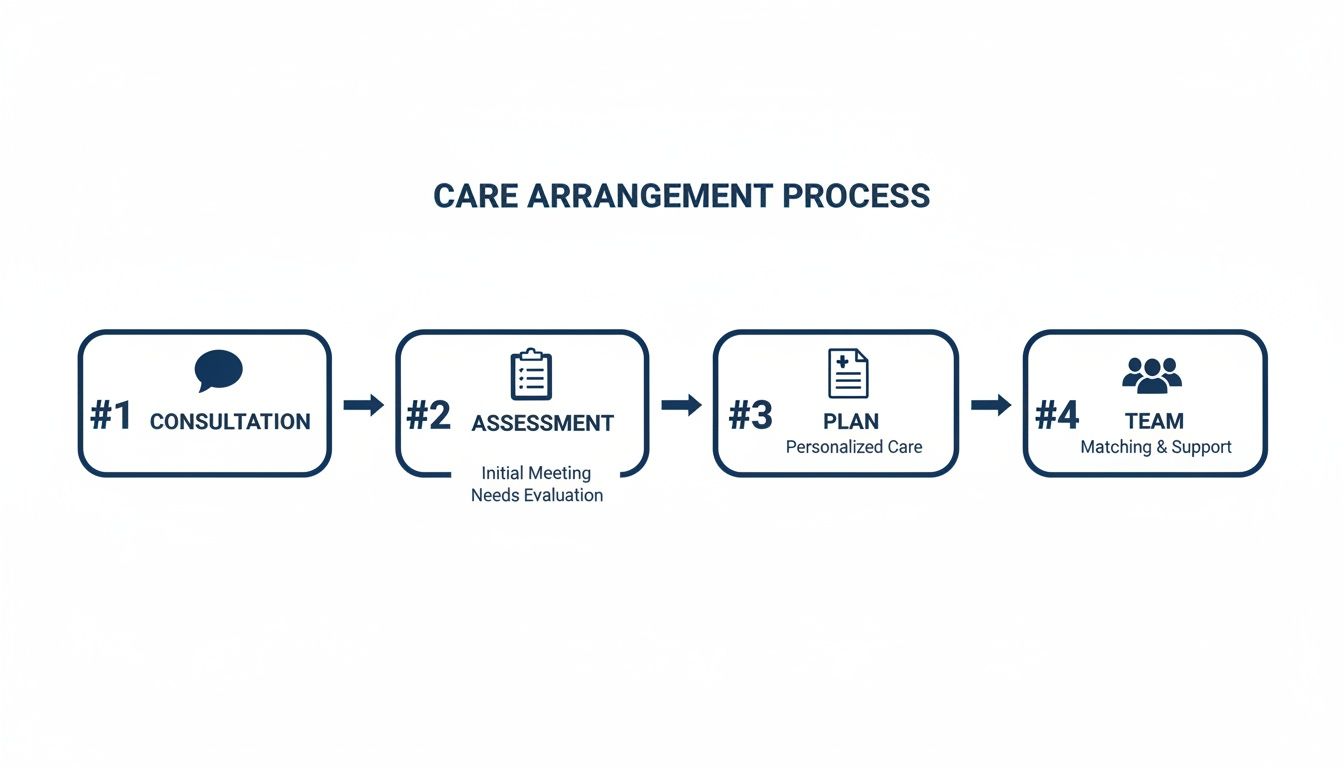
As you can see, a structured approach turns what seems like a complex process into a clear, achievable pathway, making sure no detail gets missed.
Step 3: Develop a Personalised Care Plan
Once we have a clear understanding of both personal goals and clinical needs, we work alongside you to develop a personalised care plan. This is your documented guide and schedule, outlining every single aspect of the support we’ll provide.
This is no generic template; it’s a detailed blueprint created just for your loved one. It will specify how often nurses visit, the schedule for personal care, medication timings, and what to do to manage specific symptoms. For example, a plan might detail daily wound dressing changes, weekly check-ins with the clinical nurse, and specific strategies to help with mealtimes.
Having the right people is key to making these plans work. In Australia, our palliative care workforce has huge potential, with 39% of nurses, doctors, and allied health professionals in aged care already doing palliative-related work. But even so, a person's needs are often underestimated, which is why a detailed plan is so critical for getting the right level of support. You can read more about these workforce findings.
Step 4: Assemble the Care Team
The final step is putting together the right care team. Based on the personalised plan, we hand-pick a group of registered nurses and trained support workers. This team is chosen not just for their clinical skills, but for their ability to build a genuine connection with your family.
Once the team is in place, care begins. This is the point where all the planning turns into action, with the care plan guiding every visit and interaction. It provides consistency and gives you peace of mind, knowing a dedicated, familiar team is there to provide support. For a wider view of what in-home support can cover, take a look at our guide to home care services in Sydney.
Your Palliative Care Questions, Answered
When you're navigating a serious illness, you're bound to have questions. Thinking about bringing palliative care into your home is a big step, and it's completely normal for families across Sydney and the Wollondilly region to have similar concerns. We've gathered some of the most common questions we hear to give you clear, straightforward answers and help you feel more confident in your decisions.
Getting the right information is the best way to make a choice that feels right for you and your family.
Does Starting Palliative Care Mean We Are Giving Up Hope?
Not at all. This is probably the biggest and most damaging myth about palliative care. Choosing this kind of support isn't about giving up; it’s about taking back control. It’s about focusing on comfort, dignity, and making every day the best it can be, regardless of the long-term outlook.
Think of it as adding another expert to your support team. For example, someone undergoing cancer treatment can use palliative care to manage the severe nausea from chemotherapy, making it possible for them to continue with their treatment and maintain their strength. Palliative care works right alongside treatments like chemotherapy or radiation. The whole point is to manage symptoms and ease the stress that comes with a serious illness, so you can live as fully and as comfortably as possible.
It's a proactive choice to protect your quality of life and face the future with more support and less uncertainty.
How Do You Handle Cultural or Religious Preferences?
Respecting your cultural, spiritual, and personal beliefs isn’t just an add-on; it’s at the very heart of good palliative care. The first thing a quality provider will do is sit down and talk with you about what’s important to you and your family. This conversation guides everything that follows.
The care plan we build together is designed to honour your specific practices, rituals, and traditions.
True palliative care aligns medical support with what matters most to you. It means your cultural and spiritual needs aren't just an afterthought—they are central to how we plan and deliver your care.
So, what does that look like in practice? It could mean:
- Working with Community Leaders: We can liaise with your priest, rabbi, imam, or spiritual guide to arrange visits, prayers, or ceremonies at home.
- Observing Dietary Needs: We'll make sure any meal preparation or support follows specific cultural or religious dietary laws.
- Making Space for Tradition: We can help create the time and space for family rituals that bring you comfort and a sense of connection.
Our goal is to provide care that feels familiar, respectful, and brings peace of mind to everyone involved.
What Happens If There Is a Medical Emergency at Night?
This is a crucial question, and it's one we plan for from day one. Your care plan will always have a clear, detailed emergency protocol. We'll go through it with you and your family during our initial assessment, so you'll never be left wondering what to do.
This protocol will spell out exactly what steps to take in a crisis, including who to call and when. For example, it will clarify when to call the on-call palliative care nurse versus when it's necessary to call for an ambulance.
Most reputable providers of at home palliative care offer 24/7 telephone support from a registered nurse. This means if a new symptom pops up or something feels wrong in the middle of the night, you can get expert advice immediately. That nurse can often help you manage the situation over the phone or arrange for someone to come out if needed. It’s a vital safety net that gives families real reassurance.
Can the Level of Care Change If My Condition Worsens?
Yes, absolutely. Palliative care is specifically designed to be flexible and adapt as your needs change. Your care plan isn't a document that gets filed away; it's a living guide that we review and adjust regularly with you, your family, and your GP.
If a condition progresses, we can scale the support up or change our approach to match.
Here’s a practical example: Someone living with a chronic respiratory condition might start with a nurse visiting twice a week for symptom and medication reviews. If their breathing becomes more difficult down the track, we can immediately adjust the plan to include:
- More frequent nursing visits to stay on top of symptoms.
- Support from a physiotherapist to help with breathing techniques.
- Introducing overnight care for extra support and peace of mind.
Our team is in constant communication to ensure the care you receive is always the right care for right now. This responsiveness is what makes it possible for people with complex and changing health needs to remain safely and comfortably in their own homes.
At Core Nursing Solutions Pty Ltd, our dedicated team of registered nurses and support workers provides compassionate, expert at home palliative care across Sydney and Wollondilly. We work closely with you to create a personalised care plan that honours your wishes and enhances your quality of life. To learn more about how we can support your family, visit us at https://corenurses.com.au.