
When someone needs more than just a hand with daily tasks, and their medical needs become more complex, that's where private in-home nursing care comes in. This isn't about general support; it’s about bringing skilled clinical care from a Registered Nurse right into the comfort and familiarity of your own home.
Think of it as the next level of support for those who need hospital-level care but want to stay where they feel most comfortable. For example, it might be for an elderly parent recovering from a hip replacement who needs their surgical wound checked daily, or for a child with a chronic condition who requires overnight monitoring.
What Is Private Nursing Care in Your Home?
Let's make this simple. Imagine you have two people helping a loved one at home. One is a wonderful carer who can help with meals, offer companionship, and run errands. They are an essential part of the support team.
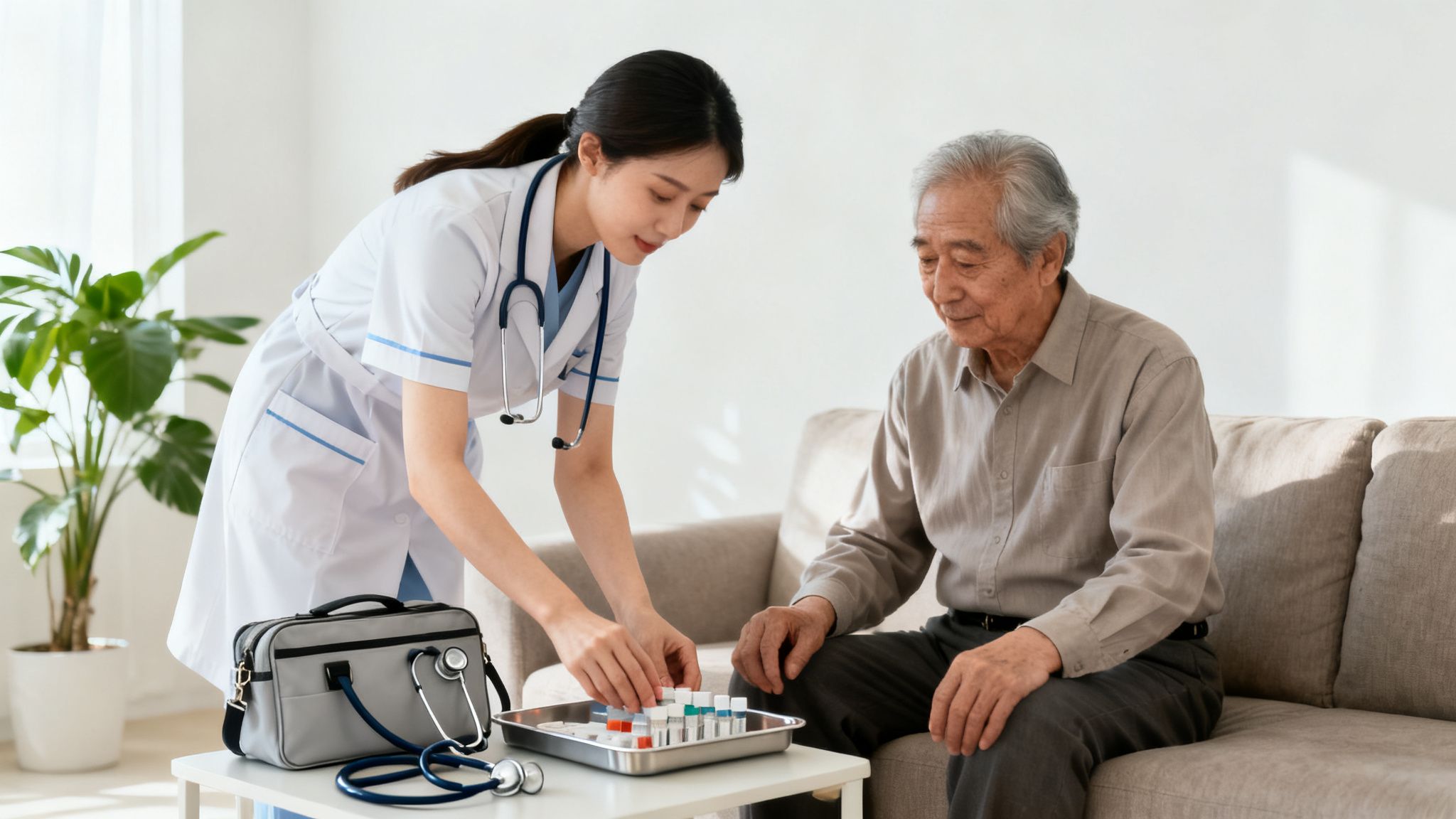
The other is a medical professional who has the training and qualifications to manage complex medications, operate a ventilator, or provide advanced wound care. That person is a private nurse. For instance, if your father has diabetes, a carer can remind him to take his pills, but a private nurse is qualified to administer his daily insulin injections and check his blood sugar levels.
This distinction is what private nursing care in home is all about. It covers the clinical tasks that, by law, must be performed by a Registered Nurse. We're moving beyond personal assistance and into the realm of specialised medical treatment and round-the-clock monitoring, all designed to ensure safety and improve health outcomes without needing a hospital stay. For many families across the Sydney to Wollondilly region, this service is a lifeline for managing serious health conditions.
The Role of a Private Nurse
So, what does a private nurse actually do? Essentially, they bridge the gap between a hospital ward and your front door, allowing for true independence at home. Their entire focus is on delivering care that is tailored to a person's specific medical needs and life goals.
Their day-to-day responsibilities often include:
- Performing Clinical Tasks: This can be anything from administering injections and managing feeding tubes to providing complex tracheostomy care. A practical example is a nurse visiting a client to flush their PEG tube after a feed to prevent blockages.
- Constant Health Monitoring: They keep a close eye on vital signs, watch for medication side effects, and are trained to respond immediately if someone's condition changes. For someone with a heart condition, this might involve daily blood pressure checks and monitoring for signs of fluid retention.
- Coordinating with Your Medical Team: A private nurse acts as the central point of contact, liaising with GPs, specialists, and allied health professionals. For example, they might call the specialist's office to report a change in a wound's appearance and receive new instructions for its care.
- Educating the Family: They empower you and your loved ones with the knowledge and confidence needed to manage health conditions effectively at home. This could involve showing a family member how to safely operate a hoist or explaining the side effects of a new medication.
By bringing professional medical expertise into the home, private nursing care gives people, including NDIS participants, the ability to maintain their quality of life and stay connected to their community, all while receiving the high-level support they need.
Ultimately, the goal is to create a safe, supportive, and professional environment where even the most complex health challenges can be managed with compassion.
You can learn more about how a comprehensive home nursing service works to support independence and well-being in our detailed guide.
The Growing Demand for In-Home Clinical Support
Families today are increasingly choosing to manage complex health needs right where they feel most comfortable: at home. This isn't just a minor trend; it's a significant shift in how we approach healthcare in Australia. We're seeing a clear move away from traditional, facility-based care, driven by a simple but powerful idea—that healing happens best in a familiar, supportive space.
For families all the way from Sydney to the Wollondilly region, bringing private nursing care into the home is becoming a practical, go-to solution for long-term health challenges or post-hospital recovery. It means people, including NDIS participants, can get high-level clinical support without giving up the independence and community connection that’s so vital.
A National Shift Towards Home-Based Care
The statistics really paint a clear picture of this movement. Australia's private nursing services market hit USD 134.2 million in 2023 and is on track to reach USD 201.1 million by 2030. This boom is being fuelled by more Australians wanting to age in place and manage their health conditions from home.
In fact, chronic disease management, a cornerstone of in-home nursing, accounted for 32.27% of the market. And as of March 2024, over 280,000 people were using Home Care Packages—a 6% jump from the year before. These are powerful numbers, and you can explore more of these private nursing market trends on Grandview Research.
This data confirms what we see on the ground every day: choosing in-home nursing is a smart, well-supported decision. Of course, bringing clinical care into the home also highlights the absolute necessity of maintaining excellent hygiene in health and aged care environments.
Why In-Home Nursing is Essential
So, what’s driving this preference for home-based care? It really comes down to a few key benefits that make a genuine difference in a person’s quality of life.
- Personalised Attention: In a hospital, a nurse’s attention is split between many patients. At home, that focus is entirely one-on-one. For instance, a nurse can spend an uninterrupted hour carefully redressing a complex wound, a luxury rarely afforded in a busy ward.
- Comfort and Emotional Well-being: There's real therapeutic power in being surrounded by your own things, family, and even pets. It naturally reduces the stress and anxiety that can hinder recovery. Someone recovering from surgery can rest in their own bed and eat familiar food, which can significantly boost their morale.
- Reduced Risk of Infection: Hospitals, by their nature, carry a higher risk of infection. Receiving care at home provides a much safer environment, especially for someone with a compromised immune system.
- Greater Independence: It allows people to stick to their own routines and stay connected to their community. For example, a person can still have their morning coffee on their balcony at 7 am, rather than waiting for a hospital's fixed schedule.
This shift isn’t just about convenience; it’s about recognising that a person's home is a powerful therapeutic setting. When skilled nursing is brought into that environment, it creates the best possible conditions for managing health with dignity and control.
For NDIS participants and their families, having reliable, professional in-home nursing is no longer a luxury—it's essential. It directly aligns with the core NDIS goal of enabling people to live an ordinary life. Our guide on chronic condition management dives deeper into how this specialised support works in practice.
Core Clinical Services Available at Home
So, what does private nursing care at home actually look like day-to-day? Let’s move past the general idea and get into the practical, hands-on clinical support that a Registered Nurse can bring into your home. This isn't about just keeping someone company; it's about delivering highly specialised medical care that manages complex health conditions, ensures safety, and dramatically improves quality of life.
Many people find themselves thrown into a world of confusing medical jargon. Instead of just listing off clinical terms, let’s unpack what these services really mean for someone trying to live well and independently at home.
The infographic below really paints a clear picture of why these in-home services are in such high demand.
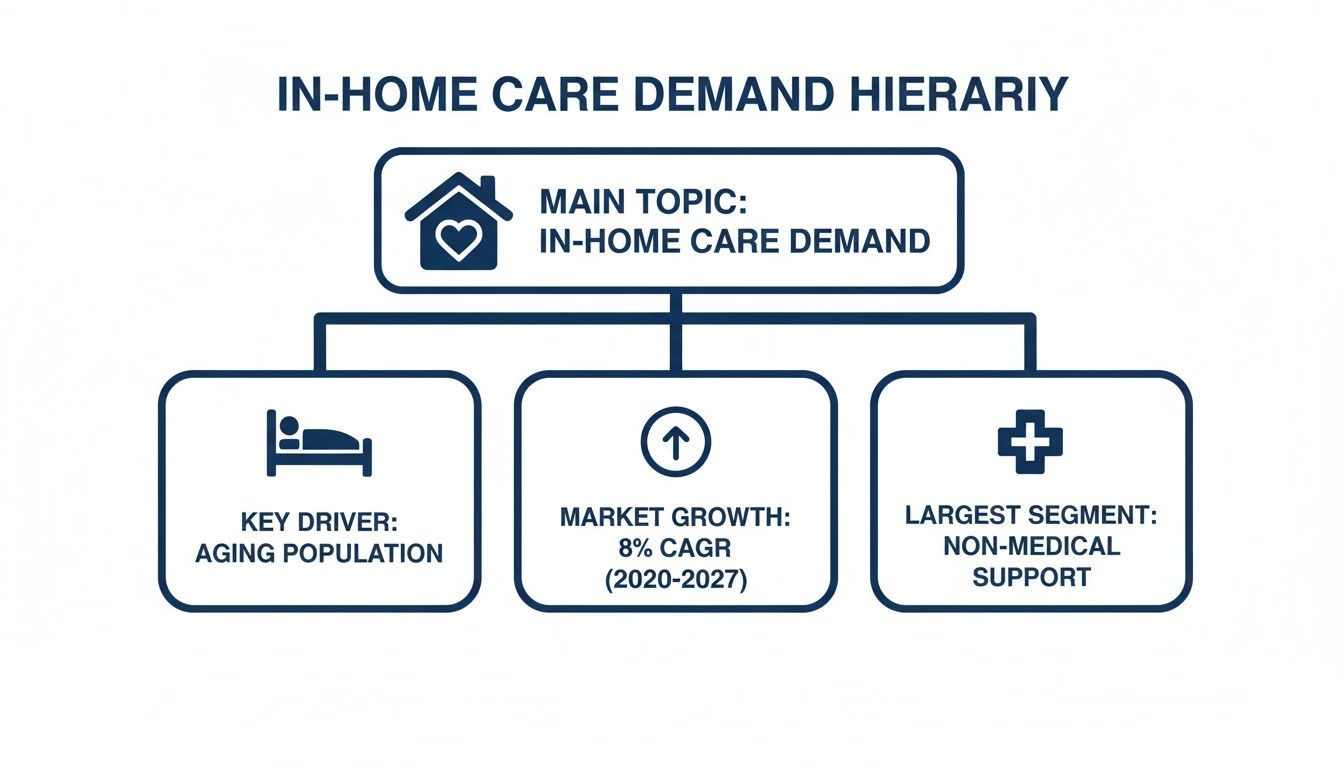
As you can see, the strong desire to receive care at home, coupled with market growth and an ageing population, makes these skilled nursing services absolutely essential.
Tracheostomy And Ventilation Support
For anyone who relies on a tracheostomy or a ventilator to breathe, having expert nursing care at home is non-negotiable. This is life-sustaining work that demands the precision and vigilance of a fully qualified Registered Nurse—it’s simply not a task for an untrained carer.
- Tracheostomy Care: A nurse meticulously ensures the stoma site is kept clean and free from infection. They handle routine tube changes and manage suctioning to keep the airway clear, always on the lookout for the earliest signs of respiratory distress so they can act immediately.
- Ventilation Support: This involves managing machines like CPAP (Continuous Positive Airway Pressure) and BiPAP (Bilevel Positive Airway Pressure). The nurse makes sure the equipment settings are exactly as prescribed, the mask fits perfectly to avoid pressure sores, and the person can breathe comfortably, day and night.
Think of it this way: someone like John, an NDIS participant with a neuromuscular condition, uses a BiPAP machine overnight. His private nurse doesn’t just set it up. They monitor his oxygen levels and breathing patterns, making tiny, specialist-approved adjustments to ensure he gets a safe and truly restful sleep.
Enteral Feeding And Nutrition Management
When a person can't eat or drink safely on their own, enteral feeding—often called tube feeding—delivers vital nutrition directly into their digestive system. A nurse's role here is absolutely critical to prevent serious complications like blockages, infections, or the tube becoming dislodged.
They expertly manage different feeding tubes, like PEG (percutaneous endoscopic gastrostomy) or nasogastric tubes. This involves administering feeds on a strict schedule, flushing the tube to keep it clear, and keeping the insertion site clean and healthy. For example, a nurse would carefully clean the skin around a PEG tube with a sterile solution daily to prevent a skin infection from developing. They’re also the first line of defence in spotting signs of intolerance and work closely with dietitians to get things right.
When setting up for this type of care, having the right equipment is key. Sometimes, looking into medical equipment rentals can be a practical way to get what you need.
Complex Wound And Catheter Care
Managing complex wounds or a long-term catheter requires an unwavering commitment to clinical best practices to prevent infection and help the body heal.
- Wound Management: This is much more than putting on a fresh bandage. A nurse assesses complex wounds—like pressure injuries, surgical sites, or diabetic ulcers—and selects the right dressings. For example, for a diabetic foot ulcer, a nurse might choose a special silver-infused dressing to fight bacteria and promote healing, a choice that requires clinical judgment.
- Catheter Care: A nurse handles the safe insertion, day-to-day maintenance, and removal of urinary catheters (whether indwelling, intermittent, or suprapubic). They are constantly monitoring to prevent blockages and painful urinary tract infections (UTIs), all while ensuring the person's comfort and dignity are maintained.
To understand how this helps, consider Maria. She was discharged from hospital after major surgery with a complex abdominal wound and a catheter. Her private nurse visited every day to clean and redress the wound, which almost certainly prevented an infection that would have landed her right back in hospital. The nurse also managed her catheter and taught Maria’s family how to assist confidently.
Medication Administration And Seizure Management
Finally, two of the most crucial services are overseeing complex medication schedules and being prepared to manage seizures. These tasks carry a huge amount of responsibility and provide immense peace of mind for families.
- Medication Management: This is especially vital for people who need regular injections (like insulin) or are juggling multiple prescriptions. A practical example is a nurse managing a medication pack for a person with dementia, ensuring they take the correct pills for their heart, blood pressure, and memory at the exact right times each day.
- Seizure Management: For someone living with epilepsy, having a nurse who is trained in seizure first aid is a game-changer. They know how to administer emergency medication, keep the person safe during a seizure, and provide the right care and monitoring afterwards.
To give you a clearer overview, here's a quick breakdown of the clinical and personal support available.
Clinical and Personal Care Services at a Glance
| Service Category | Examples of Support | Primary Goal |
|---|---|---|
| Skilled Clinical Care | Tracheostomy care, ventilation support (CPAP/BiPAP), enteral (tube) feeding, wound dressing, catheter management, medication injections. | To manage complex medical conditions, prevent complications, and provide hospital-level care safely in the home environment. |
| Personal & Daily Living | Assistance with showering, dressing, and grooming, mobility support, meal preparation, companionship, and transport to appointments. | To support independence, maintain dignity, and ensure a high quality of life with day-to-day activities. |
| Specialised Support | Seizure management, diabetes monitoring, post-operative recovery, and palliative care support. | To provide targeted care for specific health challenges, ensuring safety, comfort, and expert response when needed. |
This table shows how skilled nursing works hand-in-hand with personal support to create a complete care solution at home.
These clinical services are the very heart of high-quality private nursing care in home. This level of professional support is also invaluable in end-of-life situations. You can learn more about how our nurses provide comfort and dignity in our guide on at-home palliative care.
Figuring Out Funding and Payments
Getting your head around the funding side of things is a massive step towards making private nursing care in home a reality. For most families from Sydney to Wollondilly, the big question is, "How on earth do we pay for this?" The good news is, there are several established paths to help cover the costs, making sure skilled clinical care is there when you need it most.
The financial stuff can feel a bit overwhelming, but once you know your options, you can move forward with confidence. Whether you’re an NDIS participant, coming home from hospital, or looking to pay privately, a clear picture of the process gives you the power to find the best support for you or your family member.
The National Disability Insurance Scheme (NDIS)
For many Aussies with a permanent and significant disability, the National Disability Insurance Scheme (NDIS) is the go-to for funding in-home nursing. But just being on the NDIS doesn't automatically unlock funding for this kind of high-level support. You have to clearly show that the nursing care is ‘reasonable and necessary’ to manage your specific disability-related health needs.
Think of it like building a case for your NDIS plan. Your job is to pull together solid evidence that shows why having a Registered Nurse at home is crucial for your safety and wellbeing. It's a different ball game to funding a general support worker; this needs proper clinical justification.
To give your request the best chance of success, you'll want to gather some powerful evidence to take to your planning meeting. Things like:
- Reports from Your Specialists: A letter from a respiratory specialist or neurologist that gets straight to the point, stating the need for skilled nursing tasks like tracheostomy management or complex medication routines.
- Hospital Discharge Summaries: These are gold. They often spell out exactly what ongoing clinical care is needed at home for a safe transition.
- Assessments from Allied Health Professionals: Reports from OTs or physios can highlight specific risks that only a nurse is qualified to manage.
Here’s a real-world example: Let's imagine Sarah, who is an NDIS participant, needs enteral feeding through a PEG tube. To secure funding for a private nurse, her family gets a detailed report from her gastroenterologist. This report clearly explains the clinical risks, like the tube getting dislodged or infected, and states that these tasks must be handled by a Registered Nurse to keep Sarah safe. This kind of specific, expert evidence creates a direct line between the nursing support and her disability, making a rock-solid case for funding.
For a deeper dive, check out our guide on how to make the most of your NDIS in-home care funding.
Paying Privately and Other Ways to Fund Care
While the NDIS is a major pathway, it’s not the only one out there. A few other options exist, and one of them might be the perfect fit for your situation.
Private Pay Arrangements
Paying out-of-pocket gives you the ultimate flexibility and control. You can work directly with a provider to set up services without having to jump through eligibility hoops. For example, a family might privately hire a nurse for two hours each morning to help their father with his catheter care and medication, giving them peace of mind before they head to work. It’s a great option for people who might not qualify for government funding, or for those who just want to top up their existing support package.
Hospital-to-Home Transition Packages
When someone is discharged from a hospital in NSW, they can sometimes access short-term support to help them settle back in at home. Programs like 'ComPacks' or other transitional care packages are designed to be a "bridge" of support. A practical example would be a patient sent home after knee surgery who receives three visits from a nurse in the first week to check the wound and manage pain relief, all funded by the hospital package.
Other Avenues to Explore
Depending on your personal circumstances, a few other funding sources might be on the table:
- Department of Veterans' Affairs (DVA): If you hold a DVA card, you may be eligible for funded community nursing services.
- Private Health Insurance: Some top-tier hospital policies actually include cover for in-home nursing, especially for post-surgery recovery. It’s always worth digging out your policy documents and checking the fine print.
Looking into every possible avenue gives you a complete picture of the financial support available. It’s the best way to make a truly informed decision for your private nursing care in home.
How to Choose the Right Nursing Provider in Sydney
Choosing a provider for private nursing care in home is one of the most personal and critical decisions your family will make. It goes far beyond a checklist of clinical skills. You’re looking for a genuine partner in care—someone you can trust, communicate with openly, and who truly understands what your family needs.
This isn't a decision to be rushed. Think of it as an interview process where you're in the driver's seat. After all, you’re not just hiring a service; you’re inviting a professional into your home to look after a loved one's health and wellbeing. The aim is to find a provider who makes you feel secure and supported right from the very start.
This careful approach is more important than ever. Australia's home healthcare market has ballooned to USD 11.9 billion in 2024. But here's the catch: while the industry has a workforce of 450,000 aged care workers, the number of highly skilled Registered Nurses in the sector has actually dropped from 21,210 in 2020 to just 18,800 in 2023. This means that a well-resourced, established provider is essential to ensure you get the reliable, high-quality nursing care you need. You can read more about the latest trends in Australia's home healthcare market.
Key Questions to Ask Every Potential Provider
Before you sign any agreements, it’s vital to have a solid list of questions ready. The answers you get will tell you volumes about a provider’s professionalism, their approach to care, and how they operate. A transparent, confident provider will welcome your questions, so don't be afraid to dig a little deeper.
Here are a few great places to start:
- Care Planning and Collaboration: "Can you walk me through how you create a care plan? For example, if my mother's GP changes her medication, what is your process for updating her plan and informing the nurse?"
- Staff Qualifications and Consistency: "What qualifications and experience do your nurses have with managing ventilation? Do you try to provide a consistent nurse, or will we have a small, dedicated team?"
- Emergency Procedures: "What happens if there's a medical emergency? For instance, if my father has a fall, what's your protocol, and how do you keep the family informed during a crisis?"
- Communication and Reporting: "How often can we expect updates on our loved one’s condition? Do you use a communication book in the home or a digital portal where we can see the nurse's notes?"
- NDIS Expertise: "Are you a registered NDIS provider? How do you manage the NDIS funding and reporting side of things for nursing care?"
A provider's answers should be direct and give you real-world examples. If you get vague responses or they seem hesitant to share details, it could be a red flag that they lack structured processes.
Non-Negotiable Quality and Safety Indicators
Beyond asking questions, there are a few non-negotiable standards you should always check for. These credentials are what separate a professional, high-quality service from the rest and give you peace of mind that they are committed to safety and best practices.
Make sure any potential provider has:
- Registered NDIS Provider Status: This is a must if you're using NDIS funding. It confirms the provider meets the strict quality and safety benchmarks set by the NDIS Commission.
- Transparent Emergency Protocols: They should be able to give you a clear, written procedure for handling emergencies, detailing what steps their staff are trained to take.
- A Clear Fee and Billing Structure: You need a detailed breakdown of all costs with no hidden surprises. Ask about their policies on travel charges, minimum service hours, and cancellations.
- A Robust Feedback and Complaints Process: A good provider will have an easy-to-find and straightforward process for you to give feedback or raise a concern. Your voice should always be heard.
By using this mix of targeted questions and quality checks, you can look past the marketing speak and find a provider that truly fits your family's needs for private nursing care in home. To get a complete picture of the support available, have a look at our guide to home care services in Sydney.
Arranging Your In-Home Nursing Care Step by Step
Knowing you need help is one thing; actually getting it organised can feel like a huge hurdle. But arranging private nursing care in home doesn’t have to be overwhelming. It's a clear, structured process designed to put you at ease, from the very first phone call right through to the first day of care.
It all starts with a simple conversation. This first chat is your chance to explain your situation, share your worries, and ask all your questions. A great provider won't just talk at you; they'll listen, understand, and give you a real sense of how they can help.
This first step isn't a commitment; it's a conversation. It’s about building a foundation of trust and ensuring you feel heard and understood before moving forward with any formal arrangements.
Once you’re comfortable, the next stage is a detailed assessment. This is where a clinical professional comes to you, usually in your own home, to get a proper understanding of your needs.
The Assessment and Care Planning Process
The in-home assessment is much more than just a medical review. It's a collaborative effort. A Registered Nurse will sit down with you to discuss your medical history, your daily routines, and just as importantly, your personal goals and what matters most to you. It's about seeing the whole person, not just a list of clinical needs.
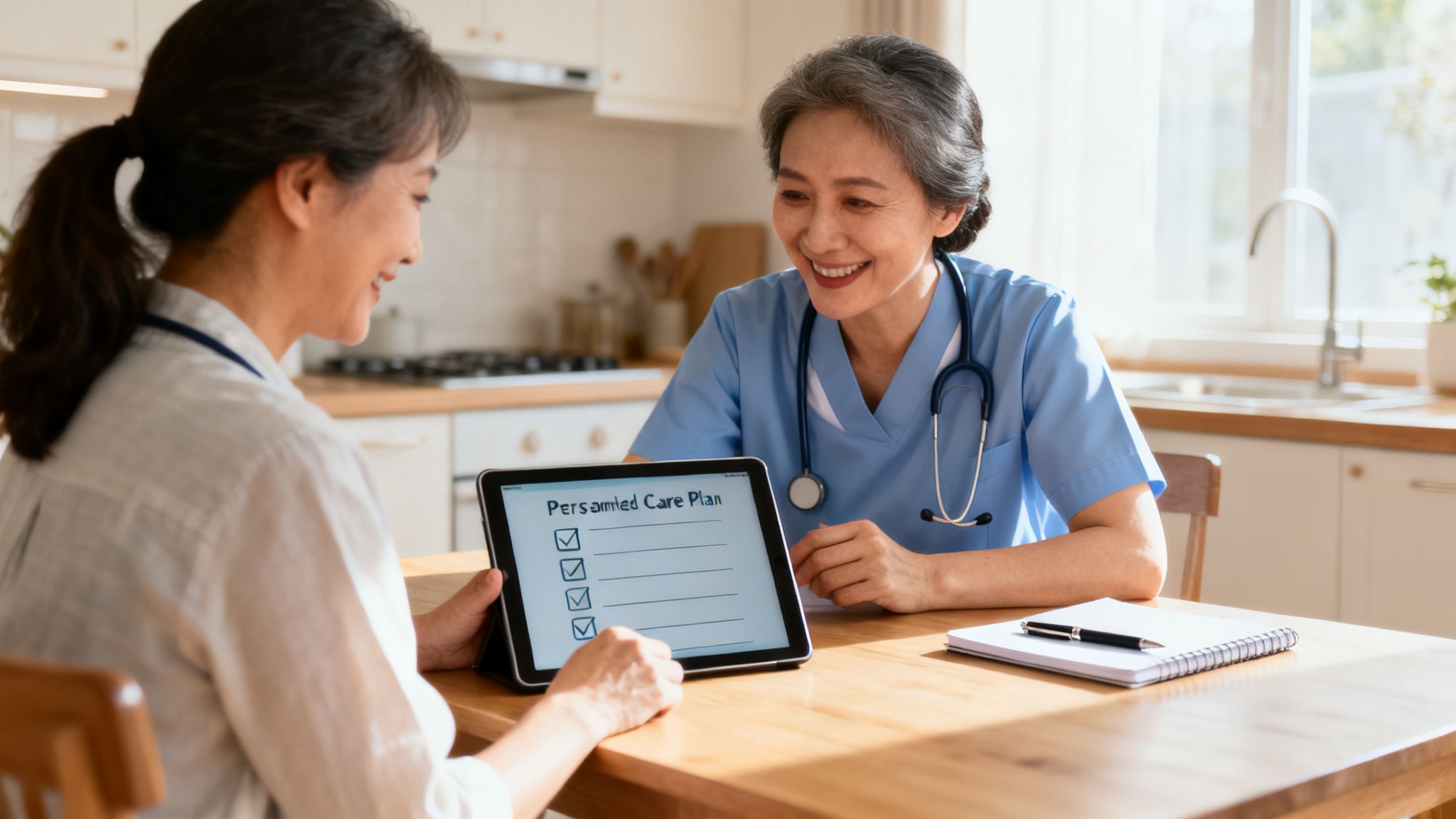
From this meeting, a personalised care plan is created. Think of it as the blueprint for your support. It’s a living document that maps out everything clearly.
It will typically cover:
- Specific Clinical Tasks: Detailing every nursing duty, from medication timings to complex wound care procedures.
- Daily Routines: Ensuring the care fits into your life, not the other way around.
- Communication Protocols: Outlining how the nursing team will work alongside your GP, other specialists, and your family.
- Goals and Outcomes: Defining what success looks like for you, whether that's managing your symptoms better or simply feeling more independent at home.
For instance, a care plan for someone recovering from surgery would spell out exactly when wound dressings are changed, the pain management schedule, and how the team will update the surgeon. This ensures everyone—you, your family, and the entire care team—is on the same page.
The final step is bringing that plan to life. You’ll be introduced to your dedicated nurse or a small, consistent team who know your plan inside and out. From day one, the focus is on providing expert, respectful care that helps you feel safe and supported in the comfort of your own home.
Your Questions, Answered
When you first start looking into private nursing care at home, it’s natural to have a lot of questions. Getting the right information is the first step toward feeling confident you’re making the best choice for your family. We've put together answers to some of the most common questions we hear from families across the Sydney to Wollondilly area.
It's all about understanding the roles, the flexibility, and how care can grow and change with you. Let’s get into it.
How Is a Private Nurse Different from a Carer?
This is probably the most important question we get, and the distinction is crucial. I like to use a house-building analogy: a carer is the skilled builder handling the essential, day-to-day framework, while a private nurse is the certified electrician managing the complex, specialised wiring. Both are vital, but their skills are very different.
A carer is there to provide wonderful support with daily life. That could be helping with personal hygiene, making meals, or simply being a friendly face. They are the backbone of maintaining a person's quality of life and independence.
A private nurse, on the other hand, is a Registered Nurse (RN) who handles clinical tasks that, by law, require a medical qualification. Their focus is purely medical, making sure complex health needs are managed safely and professionally right there in your home.
A practical example: A carer can help someone get showered and dressed, but a private nurse is qualified to change the dressing on their surgical wound afterwards.
Can We Arrange Nursing Care for a Short Period?
Of course. One of the biggest benefits of private nursing is how flexible it can be. It’s not just for long-term, ongoing situations. You can arrange for a nurse to come in for specific, shorter periods to get you through a tough spot.
For instance, this is incredibly common after someone is discharged from the hospital.
- Post-Operative Recovery: You might have a nurse visit for a few weeks to look after wound care, administer pain-relief injections, and watch for any signs of infection. It helps ensure a much smoother, safer recovery at home.
- Respite for Family Carers: We also see this used for respite. For example, a family might arrange a nurse to stay with their loved one for a weekend so they can attend a wedding, confident that all medical needs will be handled professionally.
This kind of flexibility means you only pay for the exact support you need, right when you need it.
What Happens If My Health Needs Change?
Life isn’t static, and neither is your health. A good provider knows that a care plan has to be a living document, ready to adapt the moment your needs shift. Whether a condition improves or becomes more complex, the process should be to reassess and make sure the care you're receiving is still the right fit.
This is fundamental to safe and effective private nursing care at home. It's a team effort, always involving you, your family, and your doctors.
Here’s a real-world example: Let’s say your GP prescribes a new medication that requires careful monitoring. The private nurse’s job is to work directly with the doctor. They’ll update the care plan, adjust the schedule for the new medication, and keep a close eye out for any side effects. This constant communication loop ensures your care is always aligned with your current medical needs, keeping you safe and well-supported.
At Core Nursing Solutions Pty Ltd, we believe in providing care that adapts to you, not the other way around. If you have more questions or you’re ready to chat about your family’s needs, our team is here to listen. You can start a no-obligation conversation today by visiting us at https://corenurses.com.au.